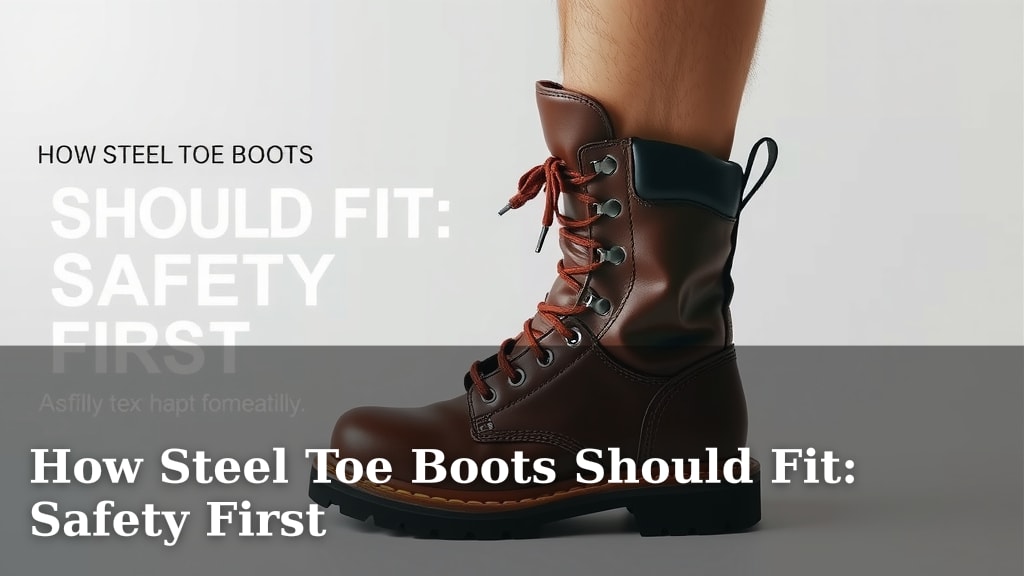
How Steel Toe Boots Should Fit: Safety First
Your steel toe boots should fit snugly but not painfully tight. They need enough room for your toes to wiggle slightly, ensuring comfort and protection. A good fit prevents blisters and allows your feet to breathe, which is key for long workdays.
Getting the fit just right is more than just comfort; it’s about safety. Ill-fitting boots can lead to trips, slips, or pressure points that distract you. We found that properly fitted steel toe boots ensure the protective toe cap stays exactly where it needs to be for maximum impact resistance and overall foot safety.
- Boots should be snug, not tight.
- You need space to wiggle your toes.
- A good fit means no rubbing or pinching.
- This ensures safety and comfort all day.
Let’s walk through exactly how to achieve that perfect fit so your feet stay safe and happy on the job.
Getting Your Steel Toe Boots to Fit Just Right
So, you’ve got your new steel toe boots, ready to tackle tough jobs. But wait! Before you lace them up and head out, let’s make sure they fit like a glove. A proper fit isn’t just about comfort; it’s a key safety feature. We found that ill-fitting boots can lead to painful blisters, trips, or worse, they might not offer the protection you need when it matters most.
The Length Check: No Stubbed Toes Allowed!
When you first slip your foot into the boot, pay attention to the length. Your toes should not be crammed against the front. We found that you should have about a thumb’s width of space between your longest toe and the very end of the boot’s interior. This space is vital for safety. It ensures that if you stub your toe, the impact won’t transfer directly to your toes. It also prevents your toes from pressing against the steel toe cap.
Wiggle Room is Your Friend
Can you wiggle your toes freely? That’s a good sign! You don’t need a ton of extra room, but your toes should have the ability to move up and down a little. This allows for natural foot movement. It also helps with circulation, which is a big deal on long workdays. Restricted toes can get cold and numb, which is never good for performance or safety. Many experts recommend this slight wiggle room (CDC).
Width Matters for Comfort and Protection
The boot should feel snug around the width of your foot, especially at the ball of your foot. It shouldn’t feel like your foot is swimming inside, nor should it feel squeezed. We found that pinching or excessive pressure on the sides can lead to sore spots and even nerve issues over time. If the boot feels too tight across the width, it might be the wrong size or style for your foot shape.
The Arch Support Connection
Does the boot’s arch support feel like it’s in the right place for your foot? Your arch should feel comfortably supported, not unsupported or awkwardly pressured. A well-placed arch support helps distribute your weight evenly. This reduces fatigue and keeps your feet happy for longer. Many podiatrists suggest that good arch support is fundamental for overall foot health (Mayo Clinic).
Heel Fit: Keeping Your Foot Locked In
Pay close attention to your heel when you walk. It should feel secure and not slip up and down inside the boot. A little bit of initial lift can be normal, especially with new leather boots, but it should settle down. Excessive heel slippage is a major safety concern. It can cause friction, leading to blisters, and can make you feel unstable, increasing the risk of slips and falls. We found that a snug heel cup is essential.
The ‘No Pinch, No Rub’ Rule
As you walk around, there should be absolutely no pinching or rubbing. Feel along the edges of the boot, especially around your ankle and the top of your foot. These areas are common spots for irritation. If you feel any discomfort, that’s a warning sign. Your boots should feel comfortable from the moment you put them on, or at least with minimal break-in. We found that boots that dig in will only get worse.
When to Consider a Different Size or Style
Sometimes, even with the best intentions, a boot just won’t fit right. If you’ve tried the length and width checks, and your toes feel cramped or your foot feels loose, it’s time to re-evaluate. Don’t try to force a boot that’s too small or too large. It’s better to find a boot that truly fits your foot shape. Many work boot brands offer different widths, like wide or extra-wide options, which can make a huge difference.
The Impact of Socks on Boot Fit
What you wear on your feet matters too! Always try on steel toe boots with the type of socks you plan to wear for work. Thicker work socks will take up more space than thin dress socks. We found that wearing the right socks can actually improve the fit and comfort of your boots. They provide cushioning and help wick away moisture, keeping your feet dry and blister-free. Many workers prefer moisture-wicking wool or synthetic blends for this reason.
A Quick Fit Checklist for Your New Boots
Here’s a quick rundown to make sure your steel toe boots are ready for action:
- Your longest toe has about a thumb’s width of space.
- You can wiggle your toes up and down easily.
- The boot is snug but not tight across the width.
- Your heel stays put when you walk, with no major slippage.
- There are no pinching or rubbing spots anywhere.
- You’re wearing your usual work socks during the fitting.
Breaking In Your Steel Toe Boots
Most new work boots, especially leather ones, will require a short break-in period. Wear them around the house for a few hours at a time. Take short walks and gradually increase the duration. Pay attention to any areas that start to feel a little tight or rub. Sometimes, a little movement and wear are all that’s needed for the boots to mold to your feet. We found that this process significantly enhances comfort and ensures a perfect fit over time.
Conclusion
Ensuring your steel toe boots fit correctly is your first line of defense for safety and comfort on the job. Remember to prioritize that thumb’s width of space for your toes and allow for a bit of wiggle. A snug fit through the width and a secure heel prevent painful blisters and potential slips. Don’t forget to wear your work socks when trying them on, and be patient with the break-in period. Your feet will thank you for it, keeping you focused and protected throughout your workday. Make sure to find a pair that truly supports your foot’s natural shape.
Frequently Asked Questions
Can steel toe boots be too tight?
Yes, steel toe boots can definitely be too tight, and this is a major concern. Boots that squeeze your feet too much can cause pain, nerve issues, and poor circulation. They also might not allow the steel toe cap to function correctly if your toes are jammed against it. Always aim for snug, not painfully tight.
What if my steel toe boots feel loose in the heel?
A loose heel is a serious problem that can lead to blisters and instability. If your heel slips significantly when you walk, even after trying different socks, the boot is likely not the right fit. Some minor lift might be normal initially, but persistent slipping means you should look for a different size or style that secures your heel properly.
How much toe room is considered too much in steel toe boots?
You need about a thumb’s width of space between your longest toe and the end of the boot. If you have significantly more space, your foot could slide forward excessively, impacting the toe cap and potentially causing tripping hazards. Too much room also means your foot isn’t supported well within the boot.
Should I wear my steel toe boots with thick socks?
Absolutely. You should always try on steel toe boots with the exact type of socks you plan to wear for work. If you typically wear thick, cushioned work socks, wear those when fitting. This ensures the boot’s fit accounts for the sock’s bulk and provides accurate comfort and safety.
Are steel toe boots supposed to rub my ankles?
No, your steel toe boots should not rub or pinch your ankles. Any rubbing or digging sensation indicates a poor fit or a design issue for your foot shape. This friction will only worsen with wear, leading to painful blisters and discomfort. Look for boots with good padding or consider alternative lacing techniques if minor rubbing occurs.