All Mountain vs On Piste Ski Boots Compared
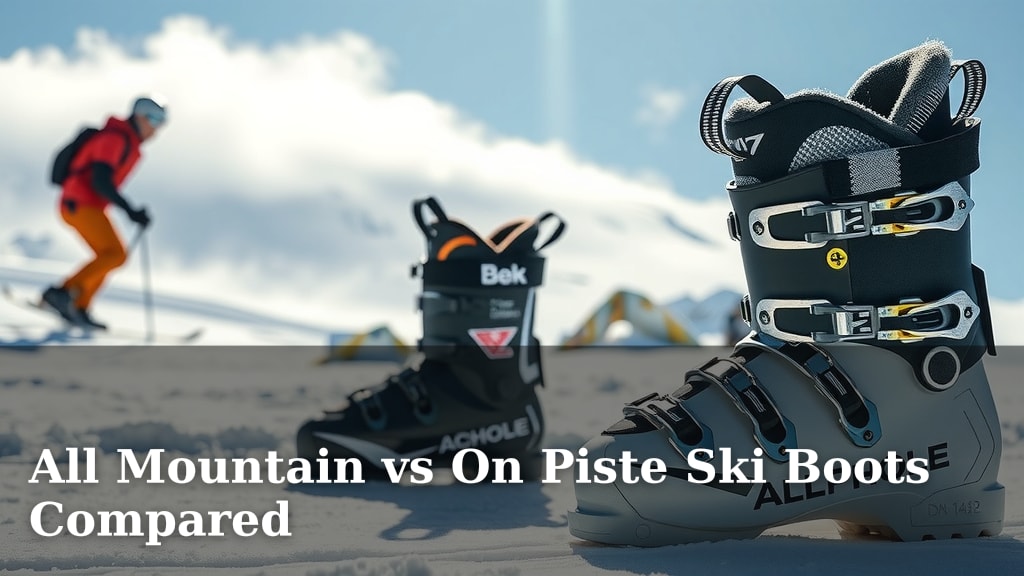
Choosing between All Mountain and On Piste ski boots comes down to where you ski most. All Mountain boots offer versatility for various snow conditions and terrain. On Piste boots are built for carving groomed runs with precision.
We found that the main difference lies in their construction and intended use. All Mountain boots often have a more forgiving flex and a walk mode for easier movement. On Piste boots focus on a stiff flex and a snug fit for maximum control on hardpack.
- All Mountain boots: Good for all-around skiing, varied snow.
- On Piste boots: Best for groomed runs, carving.
- Flex: Softer for All Mountain, stiffer for On Piste.
- Fit: Walk mode common in All Mountain; snugger in On Piste.
Let’s break down the key differences and help you decide which pair is right for your next ski trip.
Understanding the Core Differences: All Mountain vs. On Piste Ski Boots
Choosing the right ski boots can feel like a big decision, but it really boils down to your typical ski day. We’ve found that the main difference between all-mountain and on-piste boots is their design for different terrain and skiing styles. All-mountain boots are built for versatility, handling everything from groomed runs to off-piste adventures. On-piste boots are laser-focused on performance on groomed snow, offering maximum control and responsiveness for carving turns.
What Makes an All-Mountain Boot Different?
Think of all-mountain boots as the swiss army knife of ski footwear. They’re designed to perform well across a variety of snow conditions and terrain. This means they can handle groomed trails, but they also have features that make them a good choice if you occasionally venture into powder or off-piste areas. You’ll often find a more moderate flex in these boots, which makes them more forgiving and comfortable for longer days on the mountain.
Flex and Comfort for Varied Terrain
The flex rating on all-mountain boots typically falls in the middle range. A boot labeled with a flex of 80-110 for men and 70-90 for women is common. This medium flex offers a good balance. It’s stiff enough to provide support and control on groomed runs, but flexible enough to absorb bumps and varied snow conditions without feeling jarring. This balance is key to comfort when you’re skiing all day and encountering different surfaces.
The Convenience of Walk Mode
Many all-mountain boots come with a feature called “walk mode”. This is a game-changer for hikers and those who find themselves navigating flats or walking around the resort base. When engaged, walk mode loosens the boot’s cuff, allowing for a greater range of motion in your ankle. This makes walking, hiking short distances, or even just getting on and off the ski lift much easier. You’re not locked into a rigid skiing position.
What Makes an On-Piste Boot Different?
On-piste boots are engineered for one primary purpose: dominating groomed slopes. If your ideal ski day involves making clean, precise turns on perfectly packed snow, these boots are likely your best friend. They prioritize direct power transfer from your leg to the ski, giving you an immediate and responsive feel for the snow.
Stiff Flex for Precision and Power
On-piste boots are known for their stiffer flex ratings. For men, this often starts around 100 and can go up to 130 or even higher. For women, it’s typically 90 to 110+. This stiffness is essential for advanced skiers who want to carve hard and fast. A stiffer boot resists bending under pressure, meaning every subtle movement of your leg is translated directly to your ski edges. This gives you incredible control and stability, especially at higher speeds.
Snug Fit for Maximum Response
To achieve that precise connection with your skis, on-piste boots feature a snug, race-inspired fit. The goal is to eliminate any wasted movement or play between your foot and the boot. This snugness ensures that when you lean into a turn, your foot doesn’t shift inside the boot. Instead, your entire leg’s energy goes directly into edge engagement, allowing for sharper, more controlled carves.
Performance-Oriented Liner and Shell
The liners in on-piste boots are often designed to be more performance-oriented. They provide a tighter wrap around your foot and ankle, further enhancing the boot’s responsiveness. The shell construction might also be more rigid, contributing to the boot’s ability to handle aggressive skiing. Some may even have features borrowed from race boots, like adjustable spoilers for fine-tuning the forward lean.
Key Features at a Glance: Making Your Choice
To help you visualize the differences, let’s break down the common characteristics of each boot type.
| Feature | All-Mountain Boots | On-Piste Boots |
|---|---|---|
| Primary Use | Versatile; groomed runs, varied snow, light off-piste | Groomed runs; carving, speed, precision |
| Flex (Men) | 80-110 | 100-130+ |
| Flex (Women) | 70-90 | 90-110+ |
| Fit | Comfort-oriented, accommodating, some snugness | Snug, precise, performance-focused |
| Walk Mode | Often included | Rarely included |
| Weight | Moderate | Can be heavier due to stiffer materials |
| Best For | Intermediate to advanced skiers seeking one boot for varied conditions | Advanced to expert skiers prioritizing carving performance on groomed terrain |
Considering Your Skiing Style and Where You Ski
To make the best choice, ask yourself a few questions. Where do you spend most of your ski days? If you primarily ski groomed runs at a resort and love making clean carves, an on-piste boot will likely offer the performance you crave. The stiff flex and precise fit will give you the power and control to push your turns.
However, if you find yourself skiing a bit of everything – groomed slopes one run, a few inches of fresh snow the next, maybe even a short hike to a viewpoint – then an all-mountain boot is probably a better fit. The compromise in flex and the potential inclusion of a walk mode offer a more adaptable experience. Many experts agree that for the average resort skier, versatility is key (Ski Magazine).
What About Skill Level?
Your skiing ability also plays a role. Beginners and intermediates often benefit from the more forgiving flex of all-mountain boots. A softer flex makes it easier to learn and progress, as it allows for more subtle movements and is less demanding on your legs. As you advance, you might find yourself drawn to the increased responsiveness of stiffer boots, whether that’s a stiffer all-mountain option or a dedicated on-piste boot.
More advanced skiers can handle the demands of a stiffer boot. They have the strength and technique to bend a more rigid shell and effectively utilize the precise edge control it offers. If you’re hitting high speeds and making aggressive turns on hardpack, an on-piste boot will likely feel more natural and powerful.
Your Ski Boot Checklist:
- Where do you ski most often? (Groomed runs vs. varied terrain)
- What’s your general skiing ability level? (Beginner, Intermediate, Advanced)
- Do you need a boot that’s easier to walk in? (Consider walk mode)
- How important is precise carving vs. all-around comfort?
- What kind of snow conditions do you typically encounter? (Hardpack, powder, crud)
Conclusion
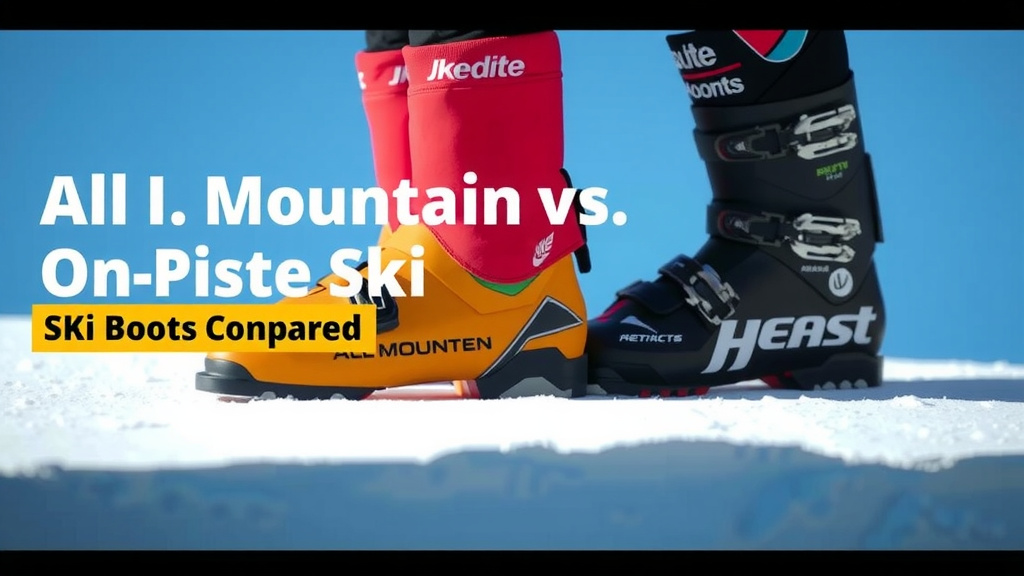
Choosing between All Mountain and On Piste ski boots boils down to your personal ski style and where you spend most of your time on the mountain. If you love carving groomers with precision and speed, an On Piste boot with its stiff flex and snug fit is your best bet. But if you prefer a boot that handles varied conditions and offers more comfort for a full day of diverse skiing, an All Mountain boot provides that essential versatility.
We found that the best way to decide is to honestly assess your typical ski day and skill level. Consider trying on both types to feel the difference. Ultimately, the right boot will enhance your enjoyment and performance on the slopes, so take this information and head to your local ski shop to find your perfect match!
Frequently Asked Questions
What’s the biggest difference between all-mountain and on-piste boots for a beginner?
For beginners, the biggest difference is usually the flex. All-mountain boots tend to have a softer flex, making them more forgiving and easier to maneuver. On-piste boots are stiffer, demanding more control and technique, which can be challenging when you’re just starting out.
Can an intermediate skier use an on-piste boot?
Yes, an intermediate skier who primarily skis groomed runs and wants to improve their carving technique can benefit from an on-piste boot. You’ll get more precise control and power transfer, helping you make sharper turns.
Are all-mountain boots comfortable for walking around the lodge?
Many all-mountain boots feature a walk mode that significantly increases ankle flexibility, making them much more comfortable for walking. While not as easy as ski touring boots, this feature is a great convenience for getting around the resort.
How does boot weight affect performance between these types?
On-piste boots might feel slightly heavier due to their stiffer materials and robust construction, which are built for maximum power transfer. All-mountain boots often use lighter materials to prioritize comfort and agility across different terrains.
If I ski both groomed runs and some off-piste, which boot type is the safer choice?
If you encounter a mix of conditions, an all-mountain boot is generally the safer and more practical choice. Its balanced flex and design allow you to handle groomed slopes effectively while still providing enough support and forgiveness for unpredictable snow and terrain.