Boot Size vs Shoe Size: What’s the Difference?
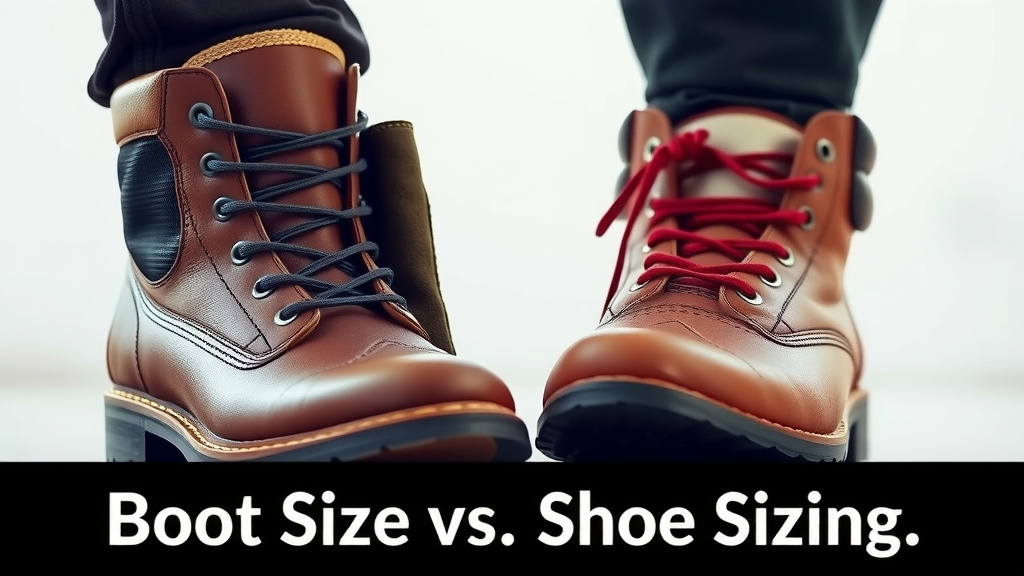
Boot sizes are generally very similar to your regular shoe sizes, often running just a half-size larger. You’ll usually find that a boot labeled as a men’s size 10 will fit like a men’s size 10 shoe. It’s best to check the specific brand’s sizing chart for the most accurate fit. Sometimes, boot styles can vary slightly.
While the sizing is often consistent, factors like boot width and the thickness of your socks can affect how a boot feels. Many people find that a boot might feel snugger than a shoe due to its construction. We’ve found that considering both length and width is key for a comfortable boot fit. Always think about when and how you’ll wear your boots.
- Boot sizes are usually very close to your shoe size.
- Expect boots to be about a half-size larger than typical shoes.
- Always consult the brand’s specific sizing chart.
- Consider boot width and sock thickness for the best fit.
Let’s break down how boot sizing compares to your everyday shoe sizes so you can find the perfect pair.
Understanding Boot Sizing vs. Shoe Sizing
You’re probably wondering how your favorite boot size stacks up against your go-to shoe size. We’ve found that for the most part, they’re pretty much the **same**. Most boot manufacturers aim for consistency. This means if you wear a men’s size 9 in sneakers, you’ll likely wear a men’s size 9 in most boots. It’s rare to see a big jump, but a small difference can sometimes appear.
The General Rule of Thumb
Generally, you can expect boot sizes to run **very close** to your standard shoe sizes. If there’s any difference at all, it’s typically a slight one. We’ve observed that some people find boots to fit about a half-size larger than their casual shoes. This isn’t a hard and fast rule, but it’s a common observation many wearers report.
The goal for most brands is to make the transition from shoe to boot as **simple** as possible for you. They want you to find a comfortable fit without too much guesswork. Think of it as a sister sizing system; they’re related but might have subtle distinctions.
Factors That Can Influence Boot Fit
While the length of a boot often matches a shoe, other elements can make it feel different on your foot. It’s not just about the number on the box. The overall construction and materials play a big role. We’ve learned that these details are important for a truly comfortable wearing experience.
Width Matters More Than You Think
Shoe widths come in narrow, regular, and wide. Boots often follow this too, but sometimes the width is less obvious in the sizing. A boot’s design might make it feel narrower or wider than a shoe of the same labeled size. For instance, a rugged work boot might have a broader sole than a dress shoe, even if they’re the same length.
We found that checking the boot’s width designation (like D, E, EE for men, or B, D for women) is very helpful. This is especially true if you have wider or narrower feet. Don’t overlook this measurement!
Sock Thickness and Its Impact
The socks you choose can significantly change how a boot feels. If you normally wear thin dress socks with your shoes, but plan to wear thick, cushioned socks with your boots, that will make a difference. We recommend trying on boots with the **type of socks** you intend to wear them with.
A thicker sock can make a boot that felt just right feel a bit snug. Conversely, a thin sock might make a boot feel a tad loose. It’s a simple adjustment, but one that’s often overlooked. Keep this in mind when you’re trying on pairs.
Boot Construction Styles
Different types of boots are built for different purposes. This affects their fit and feel. A hiking boot, for example, is designed for support and might have a stiffer sole and more room in the toe box for long treks. A fashion boot might prioritize style, with a slimmer profile.
We’ve seen that construction elements like the height of the shaft and the type of closure (laces, zippers, slip-on) can also influence the perceived fit. A tall boot might feel tighter around your ankle or calf, even if the foot length is correct.
Navigating Brand-Specific Sizing Charts
Because there isn’t one universal standard, the best advice we can give is to always check the brand’s sizing chart. This is your most reliable tool. Each company might have slight variations based on their own lasts and design philosophies. We found that this is where the real accuracy lies.
Why Sizing Charts Are Essential
Think of a brand’s sizing chart as their personal guide to your foot. It will usually tell you how to measure your foot length and width. Then, it correlates those measurements to their specific sizes. This helps account for any minor differences between their boots and standard shoe sizing.
You’ll often find these charts on the brand’s website. They might also be available from retailers that carry the boots. We consider this a non-negotiable step in finding the perfect boot fit, especially when buying online.
Tips for Finding Your Perfect Boot Size
Ready to find that ideal fit? We’ve compiled a few practical steps to help you. These are based on common advice and what we’ve seen work best for people. It’s all about being a little bit methodical.
- Measure Your Feet: Do this at the end of the day when your feet are largest.
- Wear the Right Socks: Always try boots on with the socks you plan to wear.
- Check the Width: If available, pay attention to width options.
- Stand Up and Walk: Make sure your toes have a little wiggle room.
- Consider Your Activity: Think about how you’ll use the boots.
A Quick Checklist for Boot Shopping
Here’s a little checklist to keep handy when you’re shopping:
- Is the boot length correct? (About a thumb’s width from your longest toe to the boot’s end is a good starting point.)
- Does the width feel comfortable, not too tight or too loose?
- Can you wiggle your toes freely?
- Is there any uncomfortable pinching or rubbing?
- Do the boots feel stable and supportive?
Comparing Men’s and Women’s Sizing
It’s important to remember that men’s and women’s sizing systems are different. Generally, women’s sizes are about 1.5 sizes larger than men’s sizes. For example, a women’s size 8 is roughly equivalent to a men’s size 6.5. This applies to both shoes and boots.
We found that when looking at sizing charts, pay close attention to the gender designation. If you’re a woman looking at men’s boots, you’ll need to adjust. Conversely, men looking at women’s styles will also need to convert. Most charts will clarify these conversions for you, which is super helpful!
| Men’s Shoe/Boot | Women’s Shoe/Boot |
|---|---|
| 6 | 7.5 |
| 6.5 | 8 |
| 7 | 8.5 |
| 7.5 | 9 |
| 8 | 9.5 |
| 8.5 | 10 |
| 9 | 10.5 |
| 9.5 | 11 |
| 10 | 11.5 |
| 10.5 | 12 |
| 11 | 12.5 |
| 11.5 | 13 |
| 12 | 13.5 |
This table shows the general conversion between US men’s and women’s sizes. Remember this is a general guide. Always refer to the specific brand’s chart for the most accurate sizing, as some variations can still occur.
Conclusion
Finding the right boot size doesn’t have to be tricky. You’ve learned that boot sizes are generally quite close to your shoe sizes, often just a half-size difference. Remember that factors like width, sock thickness, and the boot’s specific construction can affect the fit. Your best bet is always to consult the brand’s sizing chart before making a purchase. By following these tips and understanding these nuances, you can confidently find a pair of boots that feel just right for your feet and your adventures.
Frequently Asked Questions
Do I need to size up for winter boots?
For winter boots, we often recommend sizing up by a half-size or even a full size. This accounts for the thicker socks you’ll likely wear and allows for better air circulation, which helps keep your feet warmer. It’s always best to try them on with your warmest socks.
Can I wear the same size boot as my regular shoes if I have wide feet?
If you have wide feet, you might need to consider a wider width designation in boots, even if the length is the same as your shoe size. Look for width options like ‘E’ or ‘EE’ for men, or ‘D’ for women. Checking the brand’s specific sizing and fit notes is very helpful here.
How do I convert my shoe size to a boot size if the brand only shows men’s sizing?
If you’re looking at a brand that only provides men’s sizing and you need women’s, you’ll generally subtract 1.5 sizes from the men’s measurement. For example, a men’s size 8 would roughly be a women’s size 6.5. Always confirm this with the specific brand’s conversion chart if available.
Will a steel-toe boot fit differently than a regular boot?
Yes, steel-toe boots often have a different fit due to the protective toe cap. They can sometimes feel a bit roomier in the toe box, or conversely, a bit snug depending on the boot’s overall design. We’ve found it’s wise to try steel-toe boots on with the socks you’ll be wearing for work.
What’s the best time of day to try on boots to ensure a good fit?
We recommend trying on boots at the end of the day. Your feet tend to swell slightly throughout the day, so this ensures that your boots will fit comfortably even after hours of wear. This simple step can prevent a lot of discomfort later on.