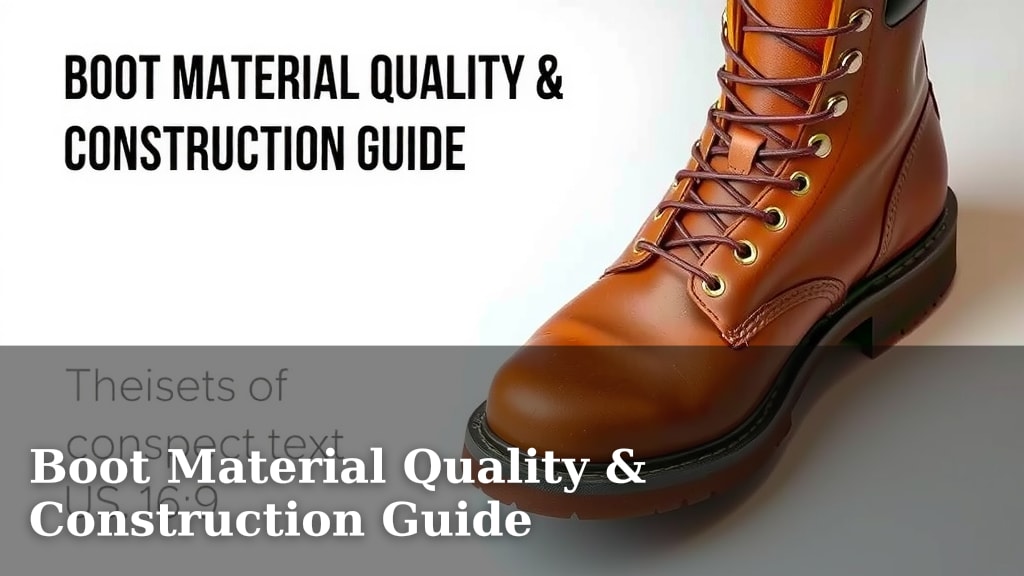
Boot Material Quality & Construction Guide
The quality of your boot material and construction makes a huge difference in comfort, durability, and performance. When choosing boots, look for materials like full-grain leather for toughness and construction methods like Goodyear welting for superior longevity.
Understanding these elements helps you avoid common pitfalls and find boots that truly fit your needs. Poorly made boots can lead to discomfort and premature wear, so paying attention to the details of boot-making is key to a good investment.
- Boot materials like full-grain leather offer the best durability.
- Goodyear welting is a sign of high-quality, repairable construction.
- Synthetic materials can be lighter but may not last as long.
- Look for sturdy stitching and reinforced stress points.
- Your feet will thank you for choosing well-made boots!
Below, we’ll guide you through the boot material and construction details that matter most, so you can make a smart choice for your feet.
Choosing Your Boots: A Guide to Materials and Craftsmanship
Finding the right boots isn’t just about looks; it’s about how they feel, how long they last, and how well they perform. We’ve put together this guide to help you understand what goes into a quality boot. Your feet will thank you for making an informed decision.
Understanding Boot Materials: The Foundation of Quality
The materials used in your boots are the first line of defense against the elements and daily wear. Think of them as the skin and muscle of your footwear.
Leather: The Tried and True Standard
Leather is a popular choice for a reason. It’s durable, breathable, and can look even better with age. But not all leather is created equal.
Full-Grain Leather: The Gold Standard
When you see “full-grain leather,” get excited. This is the highest quality leather available. It uses the entire grain layer of the hide, meaning it’s incredibly **strong and durable**. It hasn’t been sanded or buffed to remove imperfections, so you get all the natural strength and character. Many experts say this makes it the best choice for long-lasting boots (U.S. Department of Commerce).
Top-Grain Leather: A Step Down, Still Good
Top-grain leather is the next best thing. It’s also made from the top layer, but any natural surface imperfections have been removed. This means it’s still **strong and flexible**, but it might not be quite as tough as full-grain. You might see it in dressier boots.
Split Leather: A Different Kind of Material
Split leather is made from the lower layers of the hide after the top-grain is removed. It’s often used for suede or nubuck. While it can be soft and comfortable, it’s generally **less durable and less water-resistant** than top-grain or full-grain options. It might be a good choice for casual wear but not for heavy-duty tasks.
Synthetic Materials: Modern Alternatives
Synthetics offer some advantages. They can be lighter and more water-resistant right out of the box. However, they often don’t offer the same breathability or longevity as quality leather.
Nylon and Polyester: Lightweight and Tough
These materials are often found in hiking or tactical boots. They are **lightweight and can be very abrasion-resistant**. They also dry faster than leather, which is a big plus if you get them wet. But, they might not mold to your feet as well as leather over time.
Man-Made Leathers (Vegan Leather): Eco-Friendly Options
These materials are designed to mimic leather. They can be a great choice for those seeking **animal-free products**. Quality can vary wildly, so it’s important to check reviews. Some are quite durable, while others can crack or wear out quickly.

Construction Methods: How Your Boots Are Built
The way boots are put together is just as important as the materials. Good construction means your boots can withstand stress and be repaired.
Stitching: The Backbone of the Boot
Look closely at the stitching. It should be **even, tight, and consistent**. Double stitching is often a good sign, especially in high-stress areas like the toe cap or heel. Loose or uneven threads can indicate poor craftsmanship and a boot that might fall apart sooner.
Welt Construction: The Connection Point
The welt is a strip of material (often leather or rubber) that joins the upper part of the boot to the sole. This is a key indicator of boot quality.
Goodyear Welting: Built to Last and Be Repaired
This is considered the **gold standard for boot construction**. A strip of leather or rubber is stitched around the boot, attaching the upper, the midsole, and the outsole. This method makes the boots incredibly durable and, importantly, they can be **resoled multiple times**. Many boot repair shops specialize in Goodyear welted boots.
Blake Stitch Construction: A Smoother Profile
In Blake construction, the upper is directly stitched to the outsole. This creates a boot with a slimmer profile, often found in dress boots. It’s generally less water-resistant than Goodyear welting and usually cannot be resoled by standard cobblers, though some specialists can handle it. It’s a **good method, but not as robust** for heavy wear.
Cemented Construction: The Most Common, Least Durable
This is a very common method, especially in cheaper footwear. The upper is glued to the sole. It’s fast and inexpensive to produce. However, the glue can break down over time, especially with moisture or heavy use. These boots are typically **not repairable** and will likely need to be replaced once the sole wears out or detaches.
Reinforcements and Details: Small Things Matter
Pay attention to the little things. Are there extra layers of leather at the toe or heel? Are the eyelets strong and well-placed? These details add to the boot’s overall **durability and comfort**.
A Quick Checklist for Boot Quality:
- Does it use full-grain or top-grain leather?
- Is the stitching tight, even, and reinforced?
- Does it have a Goodyear welt construction?
- Are eyelets and hardware sturdy?
- Does the sole look well-attached and robust?
- Does it feel comfortable and supportive right now?
| Material Type | Typical Durability | Breathability | Water Resistance | Repairability |
|---|---|---|---|---|
| Full-Grain Leather | Excellent | Good | Moderate (can be treated) | Excellent (Goodyear welt) |
| Top-Grain Leather | Very Good | Good | Moderate (can be treated) | Very Good (Goodyear welt) |
| Split Leather (Suede/Nubuck) | Fair to Good | Fair to Good | Low (needs treatment) | Fair |
| Nylon/Polyester | Good | Fair | Good (inherent) | Poor to Fair |
| Man-Made Leather | Varies (Fair to Good) | Fair | Varies (Fair to Good) | Poor |
Conclusion
You now understand what makes a boot truly great. From the toughness of full-grain leather to the repairability of a Goodyear welt, these details matter for your comfort and your wallet. Choosing well-made boots means choosing footwear that lasts. You’re investing in a pair that will support you for years to come. Next time you shop, take a moment to check the materials and construction. Your feet will definitely thank you for it.
Frequently Asked Questions
How can I tell if my boots are made with full-grain leather?
Look for labels that clearly state “full-grain leather.” You might also notice slight natural variations in the hide’s surface, like tiny pores or wrinkles. This indicates the natural grain layer is intact, making it very durable.
What does it mean if my boots are Goodyear welted?
Goodyear welting means there’s a strip of leather or rubber stitched around the boot, attaching the upper to the sole. This construction is known for exceptional durability and allows the boots to be resoled by a cobbler, extending their lifespan significantly.
Are synthetic boot materials ever as good as leather?
Synthetic materials like nylon and polyester can be lighter and dry faster, making them great for certain activities. However, they generally don’t offer the same breathability or ability to mold to your foot over time as high-quality leather.
Why is cemented construction often found in cheaper boots?
Cemented construction involves gluing the sole to the upper. It’s a quick and inexpensive manufacturing process. Unfortunately, the adhesive can degrade over time and with exposure to moisture, making these boots less durable and usually not repairable.
How often should I expect to resole Goodyear welted boots?
How often you need to resole Goodyear welted boots depends on how often you wear them and the conditions. With regular care, you might get several resoles over the boot’s lifetime. It’s a sign of a quality boot that you can keep repairing.