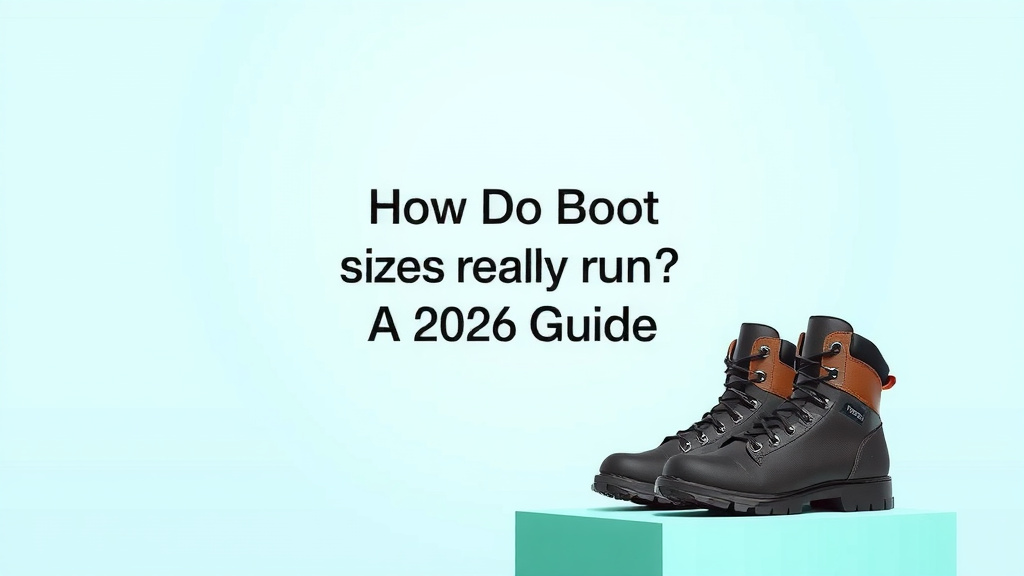
How Do Boot Sizes Really Run? A 2026 Guide
Most boot sizes run pretty true to your regular shoe size, but there are a few key things to watch out for. Many people find that boots often fit about the same as their street shoes, with some brands running slightly larger or smaller.
When you’re shopping for boots, it’s wise to consider both the length and width of your foot. Different boot styles, like work boots versus fashion boots, can also impact how they fit. Understanding these factors helps ensure you get a comfortable and supportive pair.
- Most boots fit true to your normal shoe size.
- Pay attention to both length and width.
- Different boot styles can fit differently.
- Try them on with the socks you’ll usually wear.
Let’s dive into the specifics of how boot sizes tend to run and what you can do to find your perfect fit.
Understanding How Boot Sizes Generally Run
Most boot brands aim to make their sizing consistent with regular shoe sizes. This means you can often start with your usual shoe size as a good estimate. However, a few factors can make a big difference. We found that **many people successfully order their true size** and get a great fit. But, it’s wise to know about the variations.
The General Rule: True to Size
When you’re looking at boots, the general consensus is they run pretty true to size. If you typically wear a size 9 in athletic shoes or dress shoes, you’ll likely find a size 9 boot fits similarly. This is especially true for many popular brands. It’s a good **starting point for your shopping journey**.
When Boot Sizes Might Differ
But what happens when your usual size doesn’t feel quite right? We found that certain boot styles can fit a bit differently. Think about the construction and intended use. Some boots might feel snugger or roomier than your everyday shoes. It’s not uncommon to need to go up or down a half size.
Work Boots: Built for Durability and Support
Work boots are often designed with thicker materials and extra cushioning for protection. This can sometimes make them feel a little tighter. Many people find they need to size up a half size in certain work boot styles. This gives your feet a bit more **breathing room and comfort** throughout a long day. We’ve seen this trend across several rugged brands.
Fashion Boots: Style Meets Comfort
Fashion boots, on the other hand, might prioritize a sleeker look. This can sometimes lead to a more snug fit. Some fashion boots might even run a bit smaller. It’s important to consider the boot’s profile. A pointed-toe boot might fit differently than a round-toe boot, even in the same size. **Style can influence the fit**.
Winter Boots: Room for Warmth
Winter boots are a special category. They’re usually made to accommodate thicker socks. Because of this, they might feel a bit looser if you try them on with thin socks. Experts often recommend sizing up a half size in winter boots. This ensures you have enough space for **warm, cozy socks without feeling cramped**. Cold feet are never fun!
Key Factors Affecting Boot Fit
Beyond the brand and style, other elements play a role. Your foot’s width is just as important as its length. Also, the socks you wear can make a surprising difference. Let’s look at these more closely.
Considering Foot Width
Many shoe brands offer different widths, but this isn’t always the case for boots. If you have wider feet, you might find standard-width boots a bit tight. Some brands do offer wide (W) or extra-wide (WW) options. Always check the product description. A boot that’s too narrow can cause blisters and discomfort. We recommend looking for **width-specific sizing if needed**.
The Sock Factor
What you put on your feet before the boots matters. Wearing thin dress socks with boots designed for thick hiking socks can make them feel too big. Conversely, wearing bulky wool socks with a slim fashion boot might make them too tight. **Always try on boots with the type of socks** you plan to wear them with most often. This is a simple step that guarantees a more accurate fit.
Trying Them On: The Best Way to Know
We can offer guidelines, but nothing beats trying boots on yourself. Make sure to try them on later in the day. Your feet tend to swell a bit as the day goes on. This gives you a more realistic sense of how they’ll fit after a few hours of wear. Walk around in them for a few minutes. Do they pinch anywhere? Is there enough room in the toe box? These are **essential questions to ask yourself**.
Width vs. Length: Finding the Balance
Sometimes, a boot might be the right length but too narrow, or vice-versa. If a boot is too long, your foot might slide forward, causing toe issues. If it’s too short, your toes will be cramped. For width, your foot should feel comfortably snug, not squeezed. If a boot is slightly too big in length but the correct width, insoles can sometimes help. If it’s too small, it’s usually best to **find a different size or style**.
How to Measure Your Foot for Boots
If you’re shopping online or want to be extra sure, measuring your foot is a smart move. It’s easier than you think and can save you a return trip. Here’s a simple way to do it:
- Get a piece of paper and a pen.
- Stand on the paper with your heel against a wall.
- Mark the longest part of your foot.
- Measure the distance from the edge of the paper to your mark in inches or centimeters.
- Do this for both feet, as they can be slightly different sizes.
Once you have your measurement, you can compare it to the brand’s sizing chart. Many websites provide these charts, which can be very helpful. Look for charts that include both length measurements and corresponding shoe sizes. This is a **reliable way to estimate your size**.
Using Sizing Charts Effectively
When you look at a brand’s sizing chart, pay attention to the details. Some charts are based on standard US sizing, while others might use European or UK sizing. Always check which system the chart is using. Most charts will list a measurement in inches or centimeters next to each size. **Match your foot measurement to the closest size** on the chart. Remember, these are guides, and slight variations can still occur.
A Quick Checklist for Finding Your Fit
To make your boot shopping experience smoother, keep these points in mind:
- Start with your regular shoe size as a baseline.
- Consider the boot’s style and intended use (work, fashion, winter).
- Check if the brand offers different widths if you have wider or narrower feet.
- Always wear the type of socks you plan to use with the boots.
- Try them on at the end of the day when your feet are slightly swollen.
- Walk around for a few minutes to check for any rubbing or pressure points.
Conclusion
Finding the right boot size is all about being prepared and paying attention to the details. Remember that most boots aim to fit true to your regular shoe size, but style, construction, and even the socks you wear can influence the fit. By considering both length and width, and always trying boots on with your preferred socks, you’re setting yourself up for success. Don’t hesitate to use sizing charts as a guide. Your next step is to head out and try on a few pairs using these tips. You’ll be walking in comfort in no time!
Frequently Asked Questions
Do I always need to size up for work boots?
Not always, but it’s common. Work boots often use thicker materials and offer more padding for protection. We found that many people benefit from sizing up a half size in work boots. This provides essential room for comfort during long shifts.
Can I wear my regular shoe size for fashion boots?
Often, yes. Fashion boots usually run true to your regular shoe size. However, some styles with pointed toes or a sleeker design might fit a bit more snugly. It’s smart to check the boot’s profile and consider if you need a little extra room.
How do I know if a boot is too narrow?
A boot that’s too narrow will likely feel uncomfortably tight across the widest part of your foot. You might experience pinching or pressure points. We recommend checking if the brand offers wide-width options if you have broader feet.
Will the socks I wear affect my boot size?
Absolutely. The type of socks you wear can significantly change how a boot feels. Thick winter socks will make boots feel tighter. Conversely, thin socks might make boots feel looser than intended. Always try boots on with the socks you plan to wear them with.
What’s the best time of day to try on boots?
The best time to try on boots is later in the day. Your feet naturally swell a bit throughout the day. Trying on boots when your feet are slightly larger will give you a more accurate idea of their fit during extended wear.