How Are Boots Supposed to Fit in the Calf? A Complete Guide to Perfect Boot Fit
Let me be honest with you—there’s nothing worse than slipping on a pair of boots that look absolutely stunning, only to realize they’re pinching your calf like a vice grip. I’ve been there, and I’m willing to bet you have too. The truth is, finding boots that fit properly in the calf is one of those things that seems simple on the surface but can actually be quite challenging once you dig deeper.
The calf area of a boot is genuinely one of the most overlooked aspects of boot shopping. Most people focus on toe room and heel fit, which are important, sure. But the calf? That’s where the magic really happens. A poorly fitting calf can ruin an otherwise perfect boot, causing discomfort, restricting circulation, and leaving you with unsightly red marks that take hours to fade away.
In this guide, I’m going to walk you through everything you need to know about calf fit in boots. Whether you’re dealing with slender calves, muscular calves, or something in between, you’ll find practical solutions and answers to your burning questions.
Understanding Boot Calf Fit Basics
So what exactly does it mean for boots to fit properly in the calf? Think of it this way—your calf is the bridge between your foot and the rest of your leg. If that bridge is too tight or too loose, everything falls apart. A proper calf fit means the boot hugs your leg snugly without cutting off circulation, allows you to move comfortably, and doesn’t leave pressure points that become painful after a few hours of wear.
The calf area of a boot should feel secure but not restrictive. You should be able to slip your index finger between the boot shaft and your calf with just a slight amount of pressure. Not loose enough that your foot slides around, but not so tight that you feel like you’re wearing a tourniquet.
Why Calf Fit Matters More Than You Think
Here’s the thing that most people don’t realize—poor calf fit affects way more than just comfort. When boots are too tight in the calf, they can actually impact your posture and the way you walk. I’ve noticed that when I wear boots with tight calves, I unconsciously adjust my gait to minimize movement in that area. Over time, this can lead to muscle fatigue, back pain, and even knee problems.
On the flip side, boots that are too loose in the calf create a different set of problems. Your foot slides up and down inside the boot with every step, which creates friction, blisters, and that annoying sensation of instability. Plus, loose boots just look sloppy, and nobody wants that.
Measuring Your Calf Correctly
Before you can find boots that fit your calf properly, you need to know your actual calf measurement. This is incredibly simple, but I’m shocked at how many people skip this step. They just try on boots randomly and hope for the best. That’s like trying to find your perfect shoe size without ever actually measuring your foot—it’s inefficient and frustrating.
Step-by-Step Calf Measurement Guide
Here’s exactly how to measure your calf:
- Stand with both feet flat on the ground, wearing regular socks—the kind you’d typically wear with boots
- Find the thickest part of your calf, which is usually about halfway between your knee and ankle
- Wrap a soft measuring tape around this point, keeping it snug but not tight
- Record the measurement in both inches and centimeters
- Measure both legs, as they may be slightly different sizes
- Go with the larger measurement when shopping
I always recommend measuring in the afternoon or evening rather than first thing in the morning. Your legs swell slightly throughout the day, which gives you a more accurate representation of what your calf measurement will be when you’re actually wearing boots for extended periods.
Understanding Boot Calf Sizing Standards
Most boot manufacturers provide calf width measurements, typically ranging from extra-small to extra-large. However, these standards vary significantly between brands. One company’s “medium” calf width might be another company’s “large.” This is why ordering boots online can be frustrating if you’re unfamiliar with the specific brand’s sizing.
The standard measurement for calf circumference usually starts around 12 inches for extra-small and goes up to 20 inches or more for extra-large. If your calf measures 14 inches, you’d typically be looking for a “medium” or “medium-wide” calf width. But again, always check the specific brand’s sizing chart before purchasing.
The Golden Rule of Calf Fit
I’m going to share what I call the golden rule of boot calf fit, and if you remember nothing else from this entire article, remember this:
Your boot should fit snugly around your calf without any gaps at the back of your leg, but with enough room to move your leg slightly without the boot cutting into your skin.
Let me break this down into its components because it’s really the foundation of everything else we’re discussing.
The Snug Fit Component
When I say snug, I mean the boot should follow the contours of your calf without loose fabric bunching up. If you’re seeing wrinkles or folds in the boot shaft, that’s a sign the calf is too loose. A snug fit ensures stability, proper weight distribution, and that polished look we all want.
The No-Gap Factor
Gaps at the back of your leg are the enemy. These gaps let your foot slide around, create friction points, and often lead to blisters forming on your heel or the back of your calf. They also look unprofessional. If you’re seeing daylight between your leg and the boot shaft, the calf width is too large for you.
The Movement Test
The ability to move your leg slightly within the boot is crucial for circulation and comfort. If the boot is so tight that you can’t flex your calf muscle or rotate your leg even minimally, you’ve gone too far in the tight direction. This is where that finger test comes in handy. If you can fit your index finger in there with just slight resistance, you’re in the sweet spot.
Different Boot Styles and Their Calf Requirements
Not all boots are created equal when it comes to calf fit. Different styles have different requirements and different challenges. Let me walk you through the most common types.
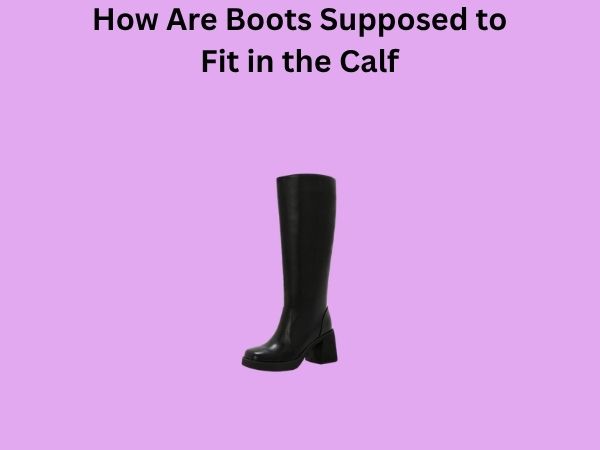
Tall Boots and Extended Calf Considerations
Tall boots that extend well above the knee put much more emphasis on calf fit because they cover more surface area. If the calf width is wrong on a tall boot, you’re dealing with discomfort over a much larger section of your leg. Many tall boot manufacturers offer multiple calf width options specifically because this area is so critical to overall comfort.
When shopping for tall boots, I always pay extra attention to whether the shaft is lined or unlined. Lined boots tend to feel tighter in the calf because the lining takes up internal space. If you have larger calves, an unlined tall boot might actually be more comfortable.
Mid-Calf Boots and the Balance Challenge
Mid-calf boots hit around the middle of your calf muscle. These are tricky because they need to be tight enough to provide support but not so tight that they create a pressure point directly on the thickest part of your calf. It’s like finding that perfect balance between too much and too little.
The advantage of mid-calf boots is that they’re often more forgiving than tall boots. If the calf fit is slightly off, you’ve got less boot surface area to create discomfort. But the disadvantage is that if the fit is too loose, you lose a lot of ankle support and stability.
Ankle Boots and Minimal Calf Impact
Ankle boots have much less boot material in the calf area, which means calf fit is less critical to overall comfort. However, this doesn’t mean you should ignore calf fit entirely. Even with ankle boots, you want the shaft to follow the contours of your leg without excessive looseness or tightness.
Work Boots and Durability Considerations
Work boots typically prioritize durability and protection over fashion, which can impact how they fit in the calf. Many work boots have thicker, stiffer materials that don’t conform to your leg as readily as fashion boots. This means calf fit is even more important for work boots because the materials won’t stretch and mold to your leg shape as much.
Common Calf Fit Problems and Their Solutions
Let’s talk about the actual problems people face with calf fit and what you can actually do about them. I’ve experienced most of these myself, so I’m not just speaking theoretically here.
Problem: Boots That Are Too Tight in the Calf
This is incredibly common, especially if you have muscular calves or if you’re shopping in standard sizes rather than wide calf options. The symptoms are obvious—redness, marks on your skin after removing the boots, pain while wearing them, and a feeling of restriction.
Here are your solutions:
- Look for boots specifically labeled as wide calf or extended calf options
- Try boots in the next size up in terms of calf width
- Consider unlined boots, which provide more internal space
- Look for boots with adjustable elements like laces or buckles that allow customization
- Visit a professional bootfitter who can assess your specific calf shape and recommend appropriate options
- Research brands known for generous calf sizing
Problem: Boots That Are Too Loose in the Calf
Loose calf fit is just as problematic as tight fit, though many people underestimate how much it affects comfort. You’ll notice your foot sliding around inside the boot, heel blisters forming, and that wobbling sensation when you walk.
Here’s what you can do:
- Size down in calf width to a medium or narrow option
- Look for boots with adjustable lacing that extends up the calf area
- Try boots with side zippers that provide more precise fit control
- Use boot socks that are thicker than normal to take up extra space
- Consider calf-fitting inserts or specialized boot liners that tighten the fit
- Try boots with elastic panels that provide adjustable compression
Problem: Uneven Calf Fit
Sometimes one leg is naturally larger than the other, or one calf is shaped differently. This creates the frustrating situation where boots fit perfectly on one leg but are either too tight or too loose on the other. Welcome to the real world of boot shopping, my friend.
Your options here include:
- Going with the larger calf measurement and using thicker socks or calf liners on the smaller leg
- Choosing boots with highly adjustable features so you can customize fit per leg
- Working with custom bootmakers who can accommodate asymmetrical measurements
- Accepting a slightly imperfect fit as the trade-off for overall comfort
Breaking In Boots for Better Calf Comfort
Here’s something important that many people overlook—some calf fit issues improve with proper break-in. This doesn’t mean the boots will magically transform if they’re seriously ill-fitting, but it does mean that reasonably close fits often improve after a period of wear.
The Break-In Timeline for Calf Areas
Most boots need somewhere between 10 to 20 hours of cumulative wear time before they really conform to your leg shape. During this period, the materials soften slightly, and your calf actually adapts to the boot contours. It’s a two-way street of adjustment.
Start by wearing your boots for short periods—maybe an hour or two around the house. Gradually increase the duration over several days. This allows the materials to soften incrementally without overwhelming your calf and leg muscles.
Techniques to Accelerate Break-In
If you want to speed up the break-in process, there are several techniques:
- Wear your boots with thick wool socks to help them conform to your leg shape
- Use a boot stretcher specifically designed for calf areas if available
- Apply leather conditioner or mink oil to soften the materials
- Gently massage the boot shaft while wearing them to encourage flexibility
- Walk around your house regularly rather than wearing them for long stretches at once
When Break-In Isn’t the Answer
I want to be clear about something—if boots are significantly too tight or too loose in the calf, break-in won’t fix it. Materials will stretch slightly, but not dramatically. If you’re experiencing pain or significant discomfort after the initial break-in period, the calf fit is probably wrong for your leg, and you should consider exchanging or returning the boots.
Adjustable Features That Make a Difference
When you’re shopping for boots, pay close attention to adjustable features specifically designed for calf fit. These features can make the difference between barely acceptable and absolutely perfect.
Lacing Systems and Calf Control
Boots with lacing that extends up the calf area are absolute game-changers for fit customization. You can tighten the lower foot area while keeping the calf looser, or vice versa. This flexibility is invaluable if you have any calf fit concerns.
Look for boots with:
- Full-length lacing from toe to top
- Separate lacing zones that can be adjusted independently
- Quick-lace systems that allow rapid adjustments
Elastic Panels and Gussets
Some boots incorporate elastic panels on the sides or back of the calf area. These panels provide flexibility and give as your leg moves, while still maintaining overall stability. They’re particularly useful if you have calf muscles that change size throughout the day due to activity and circulation changes.
Buckles, Straps, and Closures
Adjustable buckles or straps across the calf area give you precise control over fit. These are common on work boots and some fashion boots. They allow you to tighten or loosen the calf area independently of the rest of the boot.
Side Zippers for Precision Fitting
Boots with side zippers offer a significant advantage for calf fit. The zipper runs along the side of your leg, and you can control exactly how snugly the boot closes against your calf. This is especially helpful if you have difficulty pulling boots on and off while maintaining proper fit.