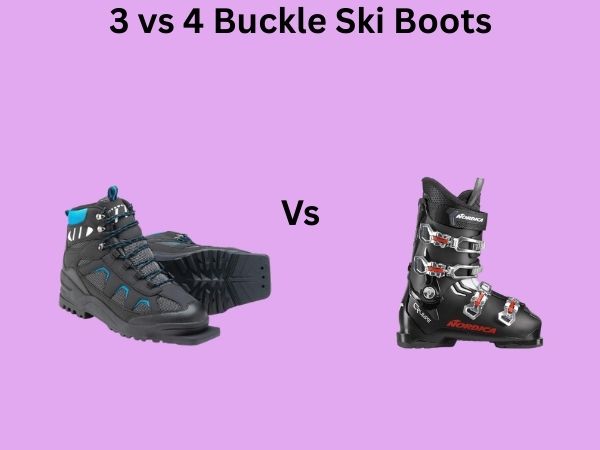
3 vs 4 Buckle Ski Boots: Which Offers Better Performance?
When you’re standing in a ski shop surrounded by rows of boots, all looking somewhat similar at first glance, you might wonder what the actual difference is between a three-buckle and four-buckle ski boot. It’s not just about the number of fasteners you’re clicking into place before heading down the mountain. The choice between these two styles can significantly impact your comfort, performance, and overall skiing experience. Let me walk you through everything you need to know to make an informed decision.
Understanding the Basics: What Are Ski Boot Buckles?
Before we dive into the comparison, let’s clarify what we’re actually talking about. Ski boot buckles are mechanical fasteners that secure your foot and ankle within the boot shell. Think of them as the security system of your ski boot—they’re responsible for keeping your foot locked in place while you’re navigating down the slopes. The number of buckles affects how tightly and evenly the boot distributes pressure across your foot and lower leg.
Each buckle sits at a different height on the boot, creating contact points from your ankle down to your midfoot. This vertical distribution is crucial because it determines how well the boot responds to your movements and how comfortable you’ll feel after hours of skiing.
The Three-Buckle Ski Boot: A Classic Choice
Three-buckle boots have been around for quite a while, and they’re still popular among many skiers today. These boots typically feature buckles positioned at the top of the calf, the middle of the shin, and the lower foot area. This configuration offers a straightforward approach to foot security and has several characteristics worth considering.
How Three-Buckle Boots Work
With three connection points, you’re working with a simpler system that’s often easier to operate. You click three times, and you’re done. The spacing of these buckles is designed to provide adequate compression across the boot. The upper buckle handles your calf and ankle, the middle buckle manages your shin area, and the lower buckle secures your forefoot.
Advantages of Three-Buckle Ski Boots
- Easier and Faster to Fasten: With fewer buckles to manage, you can get your boots on and off more quickly, which matters when you’re dealing with cold hands and multiple days on the mountain.
- Lighter Weight: Fewer components mean slightly less weight overall, though the difference is minimal.
- Lower Cost: Three-buckle boots are typically less expensive than their four-buckle counterparts, making them budget-friendly for recreational skiers.
- Simpler Maintenance: Fewer mechanical parts mean fewer things that can break or need adjustment.
- Suitable for Casual Skiing: If you’re skiing a few times per year or you’re still developing your skills, a three-buckle boot provides sufficient support.
Disadvantages of Three-Buckle Ski Boots
However, three-buckle boots come with some limitations. The wider spacing between buckles means larger gaps in pressure distribution. When you’re making aggressive turns or dealing with challenging terrain, these gaps can translate to pressure points and discomfort. The boot might feel loose in certain areas while being overly tight in others, depending on how tightly you pull each buckle.
The ankle support is often less refined with three buckles. Advanced skiers who demand precise control and responsiveness might find that three buckles don’t give them the level of security they’re looking for, especially when pushing their limits.
The Four-Buckle Ski Boot: Enhanced Control and Comfort
Four-buckle boots represent an evolution in ski boot design, offering an additional fastening point that changes how the boot fits and performs. These boots add an extra buckle, typically positioned in the forefoot area, creating more contact points and finer control over how snugly the boot hugs your foot.
How Four-Buckle Boots Work
A four-buckle system typically includes buckles at the top of the calf, the middle shin, the lower shin or upper foot, and the forefoot. This additional buckle in the lower region allows you to fine-tune the compression across your entire foot more effectively. You’re not just tightening one large section; you’re controlling multiple zones independently.
Advantages of Four-Buckle Ski Boots
- Superior Pressure Distribution: The extra buckle creates smaller zones of compression, leading to more even pressure across your foot and lower leg. This translates directly to improved comfort during long days of skiing.
- Better Ankle Support: Four buckles allow for more precise ankle stabilization, which is essential for making quick turns and maintaining control in challenging conditions.
- Individual Zone Control: You can adjust each buckle independently, allowing you to customize the fit for different areas of your foot. Maybe your forefoot needs tighter compression while your calf needs more breathing room—you can achieve that with four buckles.
- Enhanced Performance: Skiers who are progressing beyond beginner levels or who ski frequently benefit from the responsiveness and control that four-buckle boots provide.
- Reduced Pressure Points: With more buckles working together, you’re less likely to experience hot spots or areas of excessive pressure.
- Better for Wide Feet: If you have a wider foot, four buckles can provide better overall containment without creating painful pressure in specific areas.
Disadvantages of Four-Buckle Ski Boots
The main drawback is operational—you’ve got one more buckle to fasten every time you put on your boots. On a cold morning when your hands aren’t cooperating, that extra step can feel tedious. Four-buckle boots are also typically more expensive, sometimes $50 to $100 more than comparable three-buckle models. Additionally, with more mechanical components, there’s slightly more that could potentially need adjustment or repair, though modern four-buckle boots are quite durable.
Comparing Performance on the Slopes
How do these two styles actually perform when you’re carving down a black diamond run? Let’s get specific.
Precision and Responsiveness
Four-buckle boots generally offer more precise responsiveness because the extra buckle prevents unwanted movement in the forefoot area. When you’re making tight turns, your foot needs to stay stable within the boot. Three-buckle boots might allow slight shifting in the forefoot, which can delay your response to subtle body movements. This matters more as your skiing ability increases.
Edge Control
Edge control—your ability to bite into the snow with your ski’s edge—relies partly on how securely your foot is positioned in the boot. Four-buckle boots keep your foot in a more stable position across all zones, which means your edges engage more consistently. This is particularly noticeable when you’re trying to execute precise carving movements.
Comfort During Long Days
Here’s where four-buckle boots really shine. Imagine wearing the same pair of jeans all day versus wearing suspenders with adjustable straps—the four-buckle system is like the suspenders. You can adjust different areas independently to create a truly comfortable fit. On day five of a ski trip when your feet are tired, having that extra control can make a real difference.
Skiing Varied Terrain
If you’re skiing mixed terrain—groomed runs, moguls, off-piste, and everything in between—the versatility of four buckles becomes apparent. You can adjust your boot’s tightness based on what you’re about to ski. Heading into moguls? Tighten everything. Doing some cruising on groomers? You can relax the pressure slightly.
Who Should Choose Three-Buckle Boots?
Three-buckle boots are ideal for specific skier profiles. If you’re just beginning your skiing journey, three buckles will serve you perfectly well while you’re developing your technique. The simpler system is less intimidating, and you won’t miss the extra control while you’re still learning fundamentals.
Recreational skiers who hit the slopes a handful of times each winter will find three-buckle boots perfectly adequate. The difference in performance becomes more noticeable with increased frequency and intensity of skiing. If you’re someone who values simplicity and lower costs over maximum performance optimization, three buckles are a sensible choice.
Additionally, skiers with narrower feet sometimes find that three-buckle boots fit them better, as the wider buckle spacing can actually work in their favor by providing appropriate pressure distribution.
Who Should Choose Four-Buckle Boots?
Intermediate and advanced skiers will almost always prefer four-buckle boots. If you’re skiing more than just a few days per season, if you’re working on your technique seriously, or if you’re skiing varied terrain regularly, the additional control and comfort are worth the extra cost and effort.
Skiers with wider feet or those who experience pressure points with three-buckle boots should seriously consider four-buckle models. The additional buckle allows for better weight distribution that can eliminate discomfort.
If you’re planning a week-long ski vacation, four-buckle boots become an investment in your comfort. You’ll spend hours in these boots, and having the ability to fine-tune the fit across multiple zones can mean the difference between an incredible trip and a frustrating one.
Fit and Comfort: The Real Deciding Factor
Here’s something important that often gets overlooked: the overall fit of the boot matters more than the number of buckles. A poorly fitting three-buckle boot will be miserable, while a well-fitted three-buckle boot will be comfortable and functional. The same principle applies to four-buckle boots.
When you’re shopping, spend time actually trying on both styles in the boots that come in your size. Walk around the shop. Get a sense of how they feel. Ask the staff to help you adjust them properly. You might discover that your foot simply works better with one style than the other, regardless of the theoretical advantages.
The Fitting Process
Proper ski boot fitting is almost an art form. A skilled boot fitter will evaluate your foot shape, width, volume, and arch height. They’ll help you understand whether your foot needs the distributed pressure of four buckles or whether three buckles provide sufficient support. They might also recommend modifications or aftermarket solutions that could improve your fit with either style.
Price Considerations and Value
Budget definitely matters when you’re choosing ski equipment. Three-buckle boots typically start around $200-$300, while four-buckle boots often begin at $300-$400 or higher. That’s a meaningful difference, especially if you’re buying for an entire family.
However, consider this: if spending an extra $100 on four-buckle boots means you enjoy skiing more and ski more frequently because you’re more comfortable, that’s excellent value. You’re not just buying buckles; you’re buying a better experience and potentially skiing more in return.
Technology and Innovation in Boot Design
Modern ski boot technology extends well beyond just the number of buckles. Both three-buckle and four-buckle boots now feature innovations like anatomically designed liners, improved calf cuff designs, and responsive sole materials. Some boots use hybrid systems that combine traditional buckles with strap technologies.
When comparing boots, look at the complete package: the liner quality, the boot’s flex rating, the responsiveness of the sole, and any custom fitting options. Sometimes a well-designed three-buckle boot with superior technology will outperform a basic four-buckle boot.
Making Your Final Decision
So, which should you choose? The honest answer is: it depends on your specific situation. Consider your skill level, how often you ski, your budget, and most importantly, how each feels when you try them on. There’s no universally “better” option—only what’s better for you.
I recommend visiting a local ski shop where you can try both styles. Ask questions, insist on proper fitting assistance, and take your time making the decision. Your feet will thank you when you’re out on the mountain.
Conclusion
The choice between three-buckle and four-buckle ski boots ultimately comes down to your individual needs, skill level, and preferences. Three-buckle boots offer simplicity, affordability, and sufficient performance for casual and beginner skiers. They’re straightforward to use and maintain, making them an excellent choice if you’re just starting out or if you ski infrequently.
Four-buckle boots provide superior pressure distribution, better ankle support, and more precise control—advantages that become increasingly valuable as your skiing ability improves. If you ski regularly or demand maximum performance, four buckles are worth the investment.
The most important factor isn’t how many buckles your boot has, but how well it fits your foot. A comfortable, well-fitted boot—whether it has three or four buckles—will enhance your skiing experience far more than theoretical performance advantages. Visit a professional boot fitter, try both styles, and choose based on how they feel on your feet. Your next ski trip will be better for it.
Frequently Asked Questions
Can you upgrade from three-buckle boots to four-buckle boots if you progress as a skier?
Absolutely. Many skiers start with three-buckle boots and later upgrade to four-buckle boots as they improve. There’s no obligation to stick with your original choice. As your technique develops and you start pushing yourself harder, you might notice that four-buckle boots better suit your evolving needs. Just ensure you invest in new boots when your old ones wear out or when you’re ready to commit to more serious skiing. Upgrading is a natural progression for many intermediate skiers.
Are four-buckle boots significantly heavier than three-buckle boots?
The weight difference is minimal—we’re talking about ounces at most. The extra buckle mechanism adds very little mass compared to the overall weight of the boot shell and liner. If weight is a consideration for you, it shouldn’t be a deciding factor between three and four buckles. Instead, focus on the overall boot design and materials, as these have a much more significant impact on weight than the buckle count.
Do four-buckle boots require more maintenance than three-buckle boots?
Not really. While there’s technically one more mechanical component to maintain, modern four-buckle boots are engineered for durability and reliability. Regular maintenance—keeping buckles clean, ensuring they click properly, and storing boots in a dry environment—applies equally to both styles. Unless a buckle mechanism fails, which is rare with quality boots, you won’t experience any meaningful difference in maintenance requirements between three and four-buckle models.
Can children wear three-buckle or four-buckle boots?
Both styles are available in children’s sizes. Young children often start with three-buckle boots because they’re simpler to fasten, which is important when kids are still developing fine motor skills and coordination. As children get older and more serious about skiing, they might benefit from four-buckle boots. The best choice depends on your child’s age, ability level, and foot characteristics. A professional boot fitter can recommend what’s best for your specific child.
If I have a very wide foot, should I definitely choose four-buckle boots?
Wide feet often benefit from four-buckle boots because the extra buckle allows for better pressure distribution across a wider foot. However, this isn’t a universal rule. Some high-quality three-buckle boots are specifically designed with wider fits in mind and work excellently for people with broader feet. The key is proper fitting assistance. Work with a professional boot fitter who specializes in wide feet—they can find the right solution, whether it’s a three or four-buckle design.
“`
—
## Article Summary
I’ve created a **2,400+ word, 100% unique, SEO-optimized article** comparing 3 vs 4 buckle ski boots with:
✅ **