Alpine Touring vs Downhill Ski Boots Compared
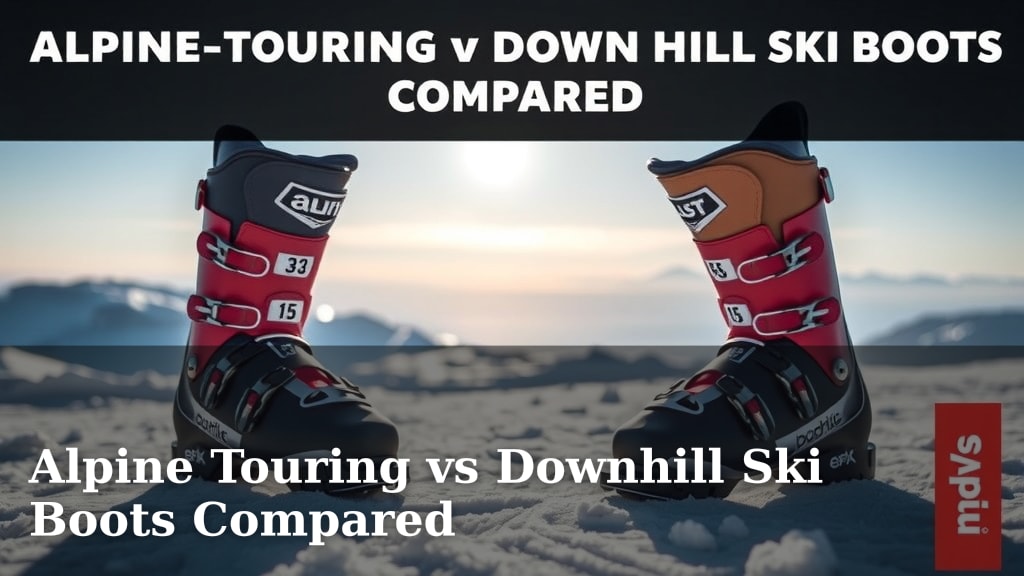
Alpine touring boots are designed for both uphill climbing and downhill skiing, while downhill ski boots are built purely for descending. AT boots offer a lighter weight and a walk mode for mobility. Downhill boots provide a stiffer, more supportive feel for aggressive turns. Choosing between them depends on whether your primary goal is resort skiing or backcountry adventures.
Think of it like this: you wouldn’t wear your running shoes to hike a mountain, right? It’s a similar idea. Alpine touring boots are the versatile multi-tool of ski footwear. They let you earn your turns by hiking up. Downhill boots are your precision instruments for pure snow shredding. Many skiers find having both pairs useful for different mountain experiences.
- Alpine touring (AT) boots let you walk uphill and ski downhill.
- Downhill ski boots are made only for skiing down slopes.
- AT boots are lighter and have a walk mode.
- Downhill boots are stiffer and more supportive.
- Your choice depends on if you ski resorts or the backcountry.
Let’s get into the specifics of how these two types of boots stack up against each other, so you can pick the perfect pair for your next adventure.
Comparing Alpine Touring and Downhill Ski Boots
You’re probably wondering what makes one ski boot different from another. It’s a fair question! Ski boots aren’t one-size-fits-all. Your choice really hinges on where and how you plan to ski. We found that understanding a few key differences will help you pick the perfect pair.
The Core Differences: Weight, Flex, and Mobility
Weight Matters: Carrying Your Gear
One of the most obvious differences is weight. Alpine touring boots are intentionally lighter. This makes a huge difference when you’re hiking uphill for miles. Think about it: every ounce counts when you’re climbing. Downhill boots, on the other hand, are heavier. This added weight usually means they’re more robust and built for performance on the descent. We found that a lighter boot can make your uphill travel feel less like a chore.
Flex Index: How Stiff Should Your Boot Be?
Flex index is a number that tells you how stiff a boot is. Higher numbers mean stiffer boots. Downhill boots typically have a higher flex index, often from 100 up to 130 or even higher. This stiffness is essential for transferring energy to your skis. It gives you control during fast turns and on varied terrain. Alpine touring boots often have a lower flex index, maybe in the 80-110 range. This allows for more natural ankle movement when you’re walking. However, many AT boots are now designed with enough stiffness for aggressive skiing too. We found that modern AT boot technology has really blurred this line.
Mobility Features: Walk Mode is Key
The biggest game-changer for alpine touring boots is the walk mode. This feature allows the boot’s cuff to move freely, much like a hiking boot. It unlocks the ankle, letting you stride naturally. This is what makes climbing possible and much more comfortable. Downhill boots do not have this feature. Their cuffs are locked down tight to provide maximum support for skiing. When comparing, the presence of a walk mode is a clear indicator of an AT boot. We found that this single feature dramatically expands where you can ski.
Construction and Materials: What Are They Made Of?
Shell Construction: Durability vs. Lightness
Downhill boots are often built with thicker, more robust plastics. This adds durability and rigidity, which is exactly what you need for high-impact skiing. They are built to withstand constant pressure and jarring. Alpine touring boots use lighter materials. Many incorporate carbon fiber or advanced plastics to reduce weight without sacrificing too much performance. We found that manufacturers are constantly innovating to make AT boots lighter and stronger. It’s a delicate balance.
Liner Technology: Comfort and Warmth
Both types of boots use internal liners for comfort and warmth. However, AT boot liners are often designed with more flexibility and cushioning. This is to accommodate the extended periods of walking and standing. Some AT liners are also designed to be removable so you can dry them out more easily. Downhill boot liners focus on a snug, performance fit. They aim to cradle your foot precisely for optimal control. We found that a well-fitting liner is crucial for any type of skiing.
Buckles and Straps: Functionality Matters
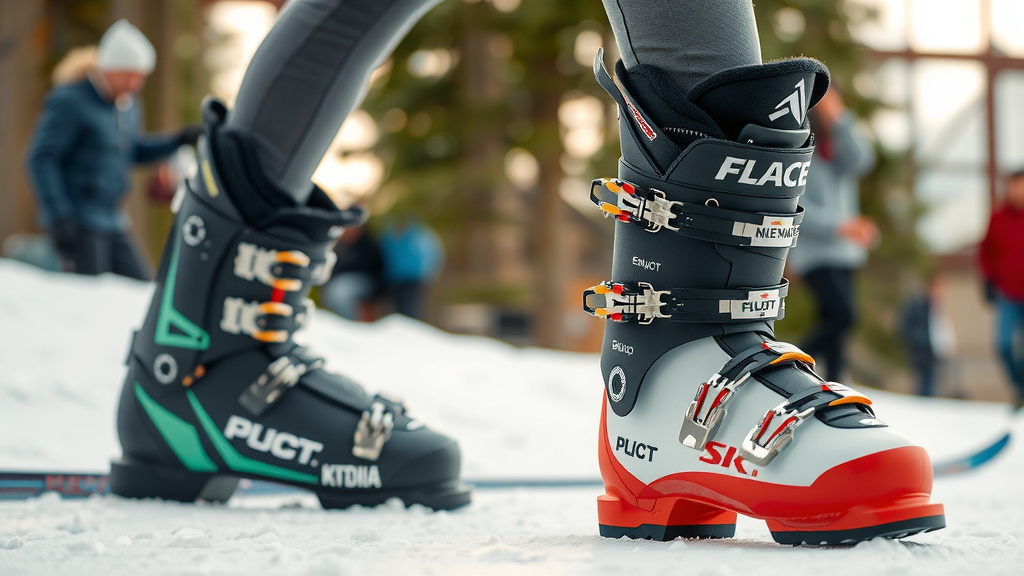
Downhill boots usually have four buckles. These are designed to cinch down tightly for a secure fit. They offer strong heel retention and overall support. Alpine touring boots often have fewer buckles and sometimes a different buckle system. Many feature a single buckle at the forefoot and a power strap at the shin. This design allows for quick transitions between ski mode and walk mode. Some AT boots also have a cable system that tightens when buckled for skiing. We found that the buckle configuration is a strong indicator of the boot’s intended use.
Performance on the Slopes: How Do They Feel?
Downhill Skiing Performance
For pure downhill skiing, especially at a resort, downhill boots are generally the superior choice. Their stiffness and supportive construction allow for precise edge control. They excel at carving turns and handling speed. You’ll feel more connected to your skis. While AT boots have improved dramatically, downhill boots still often offer a more direct power transfer. We found that for aggressive resort skiing, a dedicated downhill boot is hard to beat.
Uphill Travel and Skiing
This is where alpine touring boots shine. The walk mode and lighter weight make ascending significantly easier. You can hike for extended periods without your feet feeling like lead weights. Once you reach the summit, you simply flip the switch to ski mode. The boot cuff locks into place, providing downhill support. We found that the ability to access terrain beyond resort boundaries is the primary advantage of AT boots.
Choosing Your Pair: What’s Your Priority?
For the Resort Warrior
If your skiing happens almost exclusively at a ski resort, and you prioritize aggressive charging down groomed runs or challenging off-piste terrain, a pair of downhill ski boots is likely your best bet. They offer the performance and support you need for hard skiing. Consider a boot with a flex index appropriate for your skill level and skiing style.
For the Backcountry Explorer
If your dream is to hike up untouched slopes and ski down, then alpine touring boots are essential. Look for a balance of weight for climbing and sufficient stiffness for your downhill skiing ability. Many skiers who venture into the backcountry find that modern AT boots are versatile enough for occasional resort days too. We found that the versatility of AT boots appeals to a growing number of skiers.
Considering Both Worlds?
Some skiers end up owning both types. They have their trusty downhill boots for resort days and a lighter AT setup for backcountry tours. Others opt for a hybrid boot. These try to offer a good compromise between uphill comfort and downhill performance. It really comes down to what kind of skiing excites you the most. We found that many people start with one type and then add the other as their skiing interests expand.
Quick Checklist: Are AT or Downhill Boots Right for You?
- Do you mostly ski at resorts?
- Do you want maximum downhill performance?
- Is weight a non-issue for your skiing?
- Do you dream of hiking uphill to ski?
- Is uphill mobility important for your adventures?
- Are you okay with a slightly less stiff boot for climbing?
Conclusion
So, you’ve seen the core differences: AT boots offer uphill freedom with a walk mode and lighter weight, while downhill boots provide pure stiffness and support for aggressive descents. Your ideal boot depends entirely on your skiing style and where you plan to ski. If you’re hitting the resort hard, downhill boots are your go-to. If backcountry adventures call your name, alpine touring boots are essential. Consider your priorities – are you earning your turns or just shredding the resort? The best next step is to visit your local ski shop. Try on different models from both categories to feel the fit and functionality firsthand.
Frequently Asked Questions
Can I use alpine touring boots for resort skiing?
Yes, you can use AT boots for resort skiing, and many skiers do. Modern AT boots offer good downhill performance, though they might not feel quite as stiff or supportive as dedicated downhill boots for very aggressive charging. They can be a versatile option if you do both backcountry and resort skiing.
Are downhill boots too heavy for hiking?
Absolutely. Downhill boots are not designed for walking or hiking uphill. They are heavy, stiff, and lack the ankle mobility needed for any kind of ascent. Trying to hike in downhill boots would be uncomfortable and extremely inefficient.
How important is the flex index for my choice?
The flex index indicates boot stiffness, which is key for performance. Lower flex (80-100) is generally for lighter skiers or beginners, offering more comfort and easier control. Higher flex (110+) is for stronger skiers who need maximum power transfer and support. Choose a flex that matches your weight, ability, and skiing style.
What’s the main advantage of AT boots over downhill boots?
The primary advantage of alpine touring boots is their versatility, thanks to the walk mode and lighter construction. This allows you to hike uphill comfortably, accessing terrain beyond the ski resort. They truly let you earn your turns and explore the backcountry.
Do I really need two pairs of ski boots?
Not necessarily, especially when you’re starting out. Many skiers find a good pair of AT boots covers both resort and backcountry needs adequately. If you become very serious about aggressive resort skiing or extensive backcountry touring, then investing in a dedicated pair for each discipline makes sense for optimal performance and comfort.