Ankle Sprain Brace or Boot: Best Choice?
When you sprain your ankle, deciding between an ankle brace or boot can be confusing. Research and found that a walking boot is generally better for more severe sprains because it offers superior immobilization and support. Braces are often suitable for milder sprains needing less rigid protection.
Choosing the right support can speed up your recovery and prevent further injury. Both braces and boots help stabilize your ankle, but they offer different levels of protection. Understanding your specific injury is key to making the best choice for healing. We want you to get back on your feet!
- Boots offer more protection for serious sprains.
- Braces work well for less severe injuries.
- Proper support helps you heal faster.
- Think about your injury’s severity when choosing.
Let’s break down the differences between an ankle brace and a walking boot to help you decide what’s best for your recovery.
Ankle Brace vs. Boot: Which Support Is Right for Your Sprain?
Deciding between an ankle brace and a walking boot after a sprain can feel like a tough choice. Both aim to help you heal, but they do it in different ways. We’ve looked into what works best, and it often comes down to how badly your ankle is injured.
For more serious sprains, a walking boot generally offers better protection. For milder ones, a brace might be all you need. Let’s dig into what each one does and how to pick the right one for you.
Understanding Ankle Braces
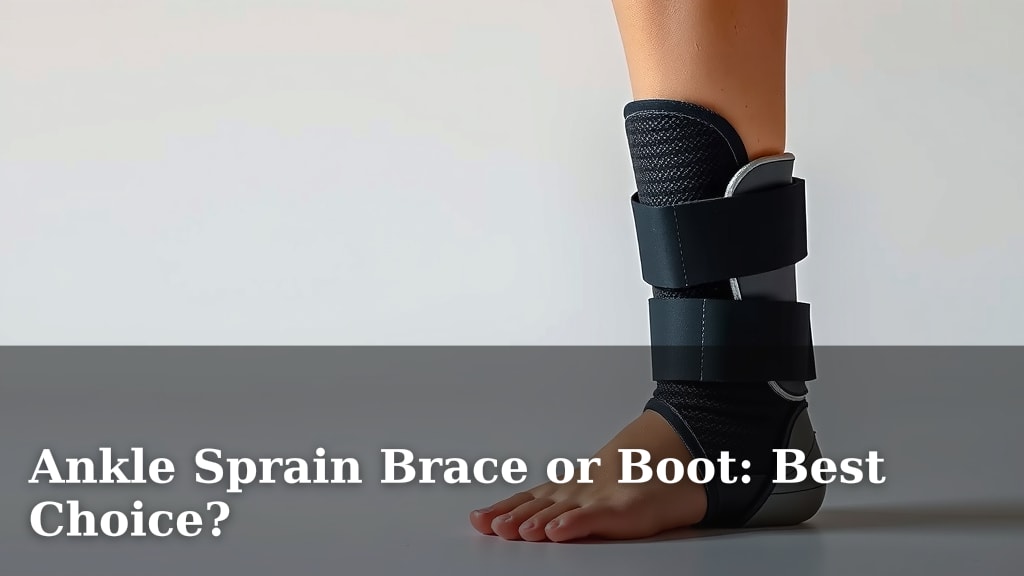
Think of an ankle brace as a supportive hug for your ankle joint. It’s usually made of softer materials like fabric, neoprene, or a combination of straps and elastic. Braces work by applying gentle pressure and limiting some movement. This helps prevent your ankle from rolling again while you’re still healing. Many are designed to fit comfortably inside your regular shoes. This makes them a good choice for daily activities when you’re not dealing with a severe injury.
Types of Ankle Braces
There are a few common types of braces you might come across. Each offers a slightly different level of support. We found that understanding these differences can help you choose wisely.
Soft/Elastic Braces
These are the simplest kind. They’re like a sleeve that you pull on. They offer mild compression and warmth, which can feel good. They are best for very minor sprains or for preventing re-injury once you’re already recovering. They don’t offer much in terms of preventing rolling, though.
Strapped or Lace-Up Braces
These braces provide more support than simple sleeves. They often have adjustable straps or laces that allow you to customize the tightness and support level. They can offer a good balance between support and allowing some movement. Many athletes use these for performance and protection.
Hinged Braces
These are a bit more advanced. They have rigid or semi-rigid supports, often with hinges on the sides. These hinges allow for a more controlled range of motion. They are designed to limit dangerous side-to-side rolling while still letting you flex your ankle up and down. They can be a good option for moderate sprains.
Understanding Walking Boots
A walking boot, also known as a CAM boot (Controlled Ankle Motion boot), is like a more robust shield for your ankle. It’s a rigid shell that typically has an inflatable air bladder system. This system allows you to adjust the compression and support. The boot immobilizes your ankle to a much greater degree than a brace. This is why research often points to boots for more significant injuries.
When to Consider a Walking Boot
Walking boots are usually recommended for more severe ankle sprains. This includes injuries where you might have torn ligaments or even a fracture. They are designed to hold your ankle completely still. This stillness is critical for proper healing in these cases.
Many medical professionals suggest a boot when you have difficulty bearing weight on your ankle. If walking is extremely painful or impossible without significant limping, a boot is often the way to go. It helps prevent further damage while your body starts the repair process.
Benefits of Using a Walking Boot
The primary benefit of a walking boot is its ability to restrict ankle movement. This is crucial for healing severe sprains. It provides excellent support and stability, acting like a temporary cast. The inflatable air cells also allow for customization. You can adjust the pressure for comfort and swelling control.
We found that boots are also useful for protecting your ankle during the recovery phase after surgery or for stress fractures. They allow you to walk, albeit with a different gait, while keeping the injured area protected. This can help maintain some level of mobility and independence.
Brace vs. Boot: Making the Right Choice for You
So, you’ve got the details on both. Now, how do you pick the best option for your specific situation? It really boils down to the severity of your ankle sprain and what your doctor recommends.
Severity of the Sprain
Here’s a general guideline based on common medical advice:
| Sprain Severity | Recommended Support | Why |
|---|---|---|
| Mild (Grade 1) | Ankle Brace (strapped or elastic) | Provides compression and mild support to prevent re-injury during movement. |
| Moderate (Grade 2) | Ankle Brace (hinged) or CAM Boot | Offers more stability to limit rolling while allowing some function. |
| Severe (Grade 3) | CAM Walking Boot | Offers maximum immobilization to allow torn ligaments or bones to heal without further stress. |
If you heard a pop, experienced severe swelling, or can’t put any weight on your foot, you likely have a more significant injury. In these cases, a walking boot is often the go-to choice. For minor twists and tenderness, a good ankle brace might be sufficient.
Comfort and Lifestyle
Your daily life also plays a role. If you need to walk around a lot for work or hobbies, a brace that fits into your shoe might be more practical for milder sprains. However, if comfort and maximum protection are key, the bulkier boot might be worth the trade-off, especially for more severe injuries.
We also found that patient preference matters. Some people feel more secure in a boot, while others prefer the less restrictive feel of a brace. Always discuss your options with a healthcare provider.
Your Doctor’s Recommendation is Key
Ultimately, the best advice comes from a medical professional. They can properly diagnose the severity of your sprain through physical examination and sometimes imaging. Many guidelines suggest consulting a doctor or physical therapist to determine the most appropriate treatment plan.
They will consider the grade of your sprain, your pain level, and your ability to move your ankle. They can then recommend whether a brace or a boot is your best bet for a speedy and safe recovery.
Checklist for Choosing Your Support:
- Assess your pain level: Is it sharp, throbbing, or just tender?
- Test your weight-bearing ability: Can you stand on it without intense pain?
- Note swelling: Is it minor puffiness or significant, rapid swelling?
- Recall the injury: Did you hear a pop or feel a tear?
- Consult your doctor: Get a professional diagnosis before deciding.
Conclusion
Deciding between an ankle brace and a walking boot hinges on your sprain’s severity. For milder injuries, a supportive brace can offer comfort and prevent re-injury during daily activities. However, research consistently shows that for moderate to severe sprains, a walking boot provides the essential immobilization needed for ligaments and bones to heal properly. Your comfort and lifestyle play a role, but your doctor’s diagnosis is always the most reliable guide. Always consult with a healthcare professional to get the right support for your ankle. This ensures you take the best path to a full recovery and get back on your feet safely.
Frequently Asked Questions
Can I wear an ankle brace instead of a boot if my sprain is severe?
Generally, for severe sprains, a walking boot is recommended over a brace. Boots offer superior immobilization, which is critical for healing torn ligaments or potential fractures. Wearing a brace for a severe injury might not provide enough support, potentially hindering recovery or causing further damage.
How long will I need to wear a walking boot or brace?
The duration depends on the sprain’s severity and how your ankle heals. Mild sprains with a brace might only need a few weeks. More severe sprains requiring a walking boot could mean several weeks to a couple of months. Your doctor will guide you on when it’s safe to reduce or stop wearing the support.
Can I shower with an ankle brace or boot on?
Most ankle braces are made of fabric and can be removed for showering, though you’ll need to be careful with a wet ankle. Walking boots are typically waterproof or have components that shouldn’t get soaked. It’s best to remove both if possible to keep them clean and dry, but always ensure your ankle is protected while showering.
Will a walking boot make my ankle weaker in the long run?
While a walking boot immobilizes your ankle to allow healing, prolonged, unnecessary use can lead to muscle weakness and stiffness. This is why doctors recommend them only for the necessary healing period. Once you’re cleared, physical therapy will help you regain strength and flexibility.
What’s the difference between an ankle brace and a compression sleeve?
A compression sleeve is a simple fabric tube offering mild compression and warmth, best for very minor sprains or prevention. An ankle brace, especially a strapped or hinged type, offers more targeted support and restricts movement more significantly to stabilize the ankle joint during recovery.