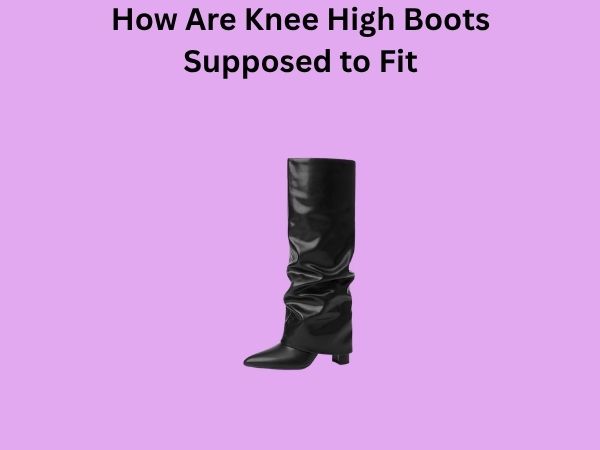
Chic & Comfortable: How Are Knee High Boots Supposed to Fit?
Let me be honest with you—I’ve made some pretty terrible boot-buying decisions in my lifetime. I’ve walked out of stores absolutely convinced that those gorgeous knee-high boots were perfect, only to spend the evening limping around like I’d just completed a marathon. Sound familiar? You’re definitely not alone in this struggle. The truth is, finding boots that fit properly is an art form that most of us never quite master, and it costs us real money and real pain.
If you’re standing in a shoe store right now, staring at a pair of stunning knee-high boots and wondering whether they’re actually going to work for you, I’m here to help you make a smarter choice. Let’s dive into everything you need to know about how knee-high boots are supposed to fit, because comfort and style shouldn’t be mutually exclusive.
Understanding the Anatomy of Proper Knee-High Boot Fit
When we talk about boot fit, we’re really discussing multiple touch points that need to work together harmoniously. Think of it like a relationship—if one part isn’t getting along with the others, the whole thing falls apart pretty quickly. Your boot needs to hug your foot, support your ankle, slide smoothly up your calf, and rest appropriately at your knee. Each of these elements matters equally.
The reason fit matters so much is that your feet carry you through your entire day. They deserve respect and proper support. A poorly fitting boot can throw off your gait, cause blisters, create pressure points, and honestly make you miserable. But when you get the fit right? That’s when the magic happens. You’ll forget you’re wearing them because they feel like an extension of your own body.
The Heel Fit: Your Boot’s Foundation
Why Your Heel Position Matters More Than You Think
Your heel is the foundation of your entire boot experience. Imagine trying to build a house on quicksand—even if everything else is perfectly constructed, it’s all going to crumble without a solid base. The same principle applies to your boots.
When you’re trying on a knee-high boot, here’s what you need to feel: your heel should sit snugly in the heel cup, but not so tight that it causes discomfort. You should be able to slip a single finger behind your heel when your foot is fully inserted into the boot. Not two fingers, not three—just one. This is the sweet spot that allows your heel to remain stable without restricting circulation or causing that awful heel slipping that happens when boots are too loose.
Signs Your Heel Fit Is Wrong
- You can slide your entire thumb in behind your heel while wearing the boot
- Your heel lifts when you walk, making a clicking or popping sound
- You’re developing blisters on the back of your heel or around the sides
- Your heel feels completely immobilized with no give at all
- The heel rubs against the inside or outside of your foot
If you’re experiencing any of these issues, it’s time to keep looking. A boot with poor heel fit is destined to cause problems down the road.
The Ball of Your Foot: Where Comfort Comes In
Finding Your Perfect Width at the Widest Point
The ball of your foot is the widest part of your foot, and your boot absolutely needs to accommodate this area comfortably. This is where a lot of people go wrong—they focus on getting the overall boot on their foot, but they don’t pay attention to whether this critical area has enough room.
Walk around in the boot when you’re trying it on. Pay special attention to the area across the ball of your foot. You should be able to feel the boot’s structure, but it shouldn’t squeeze or constrict. Your toes shouldn’t feel cramped, and you should be able to wiggle them slightly without your whole foot moving inside the boot.
The Pressure Point Test
Here’s a technique I use every single time I buy boots: press your fingers on the outside of the boot at the ball of your foot area. You should be able to press in about a quarter-inch. If the boot is so rigid that you can’t press in at all, it’s likely too tight. If you can press in more than half an inch, it might be too loose. This simple test can save you from future regret.
Ankle Support: The Often-Overlooked Component
How Much Support Should You Actually Feel?
Your ankle is a delicate structure with lots of bones, tendons, and ligaments. A good knee-high boot should provide support without feeling like a vice grip. When you’re standing in the boot, you should feel a gentle hug around your ankle area, almost like a comfortable embrace rather than a tight squeeze.
Some people think that tighter means better support, but that’s actually a misconception. Support comes from the boot’s structure and construction, not from how hard it pinches. A well-constructed boot with proper materials will support your ankle without needing to feel overly tight.
Testing Your Ankle Fit
- Stand on one leg and try to twist your foot side to side—you should feel minimal movement inside the boot
- Rock forward and backward—your ankle shouldn’t roll excessively
- Walk up stairs or a slight incline—your ankle should feel stable, not wobbly
- Move your foot in circles—the boot should move with your foot, not independently
Calf Fit: The Tricky Middle Section
Understanding Calf Circumference
Here’s where things get complicated, and honestly, where a lot of people struggle. Everyone’s calves are different—some people have slender, delicate calves while others have more muscular builds. This is why calf fit is so personal and why you really can’t rely on size alone.
When you pull a knee-high boot up over your calf, it should slide up smoothly without excessive resistance. The boot should fit snugly around your calf without creating any unsightly bulges or gaps. Think of it like Goldilocks—not too tight, not too loose, but just right.
The Calf Bulge Problem
You know that uncomfortable situation where you get the boot halfway up your calf and then you’re basically wrestling it the rest of the way up? That’s a sign the calf circumference is too small for you. Don’t force it. A boot that’s too tight in the calf can restrict blood flow, cause numbness, create pressure points, and honestly just make you miserable.
On the flip side, if there’s significant gapping between the boot and your calf—like you could fit your fingers in there—the boot is probably too loose. This can cause the boot to slip and slide when you walk, creating friction and blisters.
Wide Calf Solutions
If you’re someone with fuller calves, don’t lose hope. Many brands now offer wide calf options, and some boots are designed specifically with this in mind. Wide calf boots typically have about a half-inch to an inch of extra circumference built into the calf area. It’s worth seeking these out if standard boots don’t work for you.
The Knee Area: Where Form Meets Function
How High Should Your Boots Actually Go?
Traditional knee-high boots are designed to hit right below the knee or at the knee itself. However, here’s the thing—not everyone has the same leg proportions. What looks perfect on one person might sit awkwardly on another.
When you’re wearing your boots, the top of the boot should sit no more than a couple of inches below your knee. If it’s sitting significantly lower, it might technically be a knee-high boot, but it could feel off proportion-wise with your body. Conversely, if the boot is pushing right into the back of your knee, it can feel uncomfortable and restrict your movement when you bend your leg.
Movement and Flexibility at the Knee
Here’s a test most people don’t think to do: sit down in the boot. Seriously, take a seat and bend your knee. The boot should move with your leg naturally. You shouldn’t feel pressure or restriction in the back of your knee, and your leg shouldn’t feel trapped. If sitting down feels uncomfortable, walking all day in these boots is going to be torture.
The Instep and Overall Arch Support
Why Arch Support Isn’t Optional
Your arch is responsible for absorbing shock and distributing your body weight evenly across your foot. When you wear boots without proper arch support, you’re essentially asking your foot to work harder than it needs to. Over time, this can lead to foot pain, plantar fasciitis, and other issues.
A properly fitting knee-high boot should have an insole that supports your arch without feeling like it’s pushing up too aggressively. Everyone’s arch is different—some people have high arches, some have low arches, and some have something in between. The boot’s arch support should feel like gentle encouragement, not a poking stick.
Insole Comfort Assessment
When you first put on a boot, pay attention to how the insole feels. You might want to wear them around the shoe store for several minutes to get a real sense of how they feel. Does the instep feel supported? Do you notice any pressure points on the bottom of your foot? Is there adequate cushioning?
The Overall Tightness Factor
How Tight Is Too Tight?
This is probably the most common question I get asked, and here’s my honest answer: if you’re uncomfortable while trying them on, they’re probably too tight. I know that boots can stretch a bit, especially leather boots, but there’s a limit to how much stretching will actually happen. Don’t count on a tight boot becoming comfortable after a month of wear.
The golden rule is this: your boot should feel comfortable within the first five minutes of wearing it. There might be a tiny break-in period where leather softens slightly, but the overall fit shouldn’t require significant adjustment.
The Circulation Check
If you can’t feel your toes or if your foot starts tingling while you’re trying on boots, that’s a red flag. Numbness or tingling indicates the boot is restricting circulation, which is definitely not okay. Remove the boot immediately and try a larger size or a different style.
Length and Toe Room: Don’t Forget Your Toes
Your Toes Need Breathing Room
I think a lot of people focus so much on the calf and ankle area that they forget about their toes, which is a shame because your toes live in your boots too. You should have about a half-inch to three-quarters of an inch of space between the tip of your longest toe and the end of the boot.
To check this, push your foot all the way forward in the boot, then slide one finger down the back of the boot. That finger should fit comfortably. If you’re jammed right up against the end of the boot, it’s too short.
The Bunching Problem
Another issue I’ve dealt with personally is when your toes bunch up inside the boot because there’s a toe box that’s too tapered or restrictive. Your toes should have a little wiggle room. They shouldn’t feel squashed together like sardines in a can.
Material Matters: How Different Materials Affect Fit
Leather Versus Synthetic Materials
Here’s something that significantly impacts fit: what your boots are made from. Leather boots tend to stretch and mold to your foot over time, which means they might be slightly snug when you first get them. Synthetic materials, on the other hand, don’t typically stretch as much, so what you feel in the store is pretty much what you’re going to get.
If you’re buying leather boots, you can be a little more forgiving of initial tightness, as long as it’s not painfully tight. If you’re buying synthetic boots, aim for a fit that feels pretty much perfect right from the start.
Suede, Nubuck, and Other Finishes
The finish on your boot material also matters. Suede and nubuck can stretch a bit, and they also soften with wear. Smooth leather stretches differently. Understanding what your boots are made from will help you have realistic expectations about how they’ll fit after wearing them for a while.
Breaking In Your New Boots: The Right Way
The Gradual Introduction Method
So you’ve found boots that fit pretty well, but they’re a little snug. Here’s how to break them in properly without destroying your feet in the process. Wear them for short periods initially—maybe just one or two hours at a time. Gradually increase the time you spend in them.
The key is to avoid wearing them for eight hours straight on day one. That’s a recipe for blisters and regret. Instead, give your feet time to adjust. Most leather boots will stretch about a half-size with proper break-in.
Tools and Techniques for Faster Break-In
- Use a boot stretcher designed for calf stretching if needed
- Apply leather conditioner or stretching spray to problem areas
- Wear thick socks during the break-in period for extra cushioning
- Use moleskin or cushioning tape on areas prone to blistering
- Walk around your house in them before taking them out in public
Common Fitting Mistakes People Make
Ignoring the Calf Fit
This is probably the biggest mistake I see people make. They get so focused on whether the foot part fits that they ignore how the calf feels. A boot that’s too tight in the calf will never be comfortable, no matter how perfect the foot portion is.
Buying for the Shoe Size Rather Than the Fit
Here’s something controversial: sizes don’t matter. What matters is how the boot actually fits your foot. You might be a size 8 in one brand and a size 9 in another. Don’t get attached to a number—try things on and judge based on actual comfort and fit.
Assuming Expensive Means Better Fit
Price doesn’t always correlate with fit quality. I’ve worn hundred-dollar boots that fit terribly and thirty-dollar boots that were perfect. Higher price might mean better materials or construction, but it doesn’t automatically mean better fit for your specific feet.
Shopping Tips for Finding Your Perfect Fit
Shop at the Right Time of Day
Your feet actually swell throughout the day, so they’re biggest in the late afternoon or evening. If you shop for boots in the morning when your feet are smaller, you might get a fit that’s too tight by evening. Shop later in the day to ensure you’re getting boots that work for your feet at their largest.
Bring the Right Socks
The thickness of your socks matters. Bring the type of socks you’ll actually wear with your boots and try them on while wearing those socks. If you’re planning to wear thick wool socks but you try on the boots with thin nylon socks, you’re going to have a fit problem when you actually wear them.