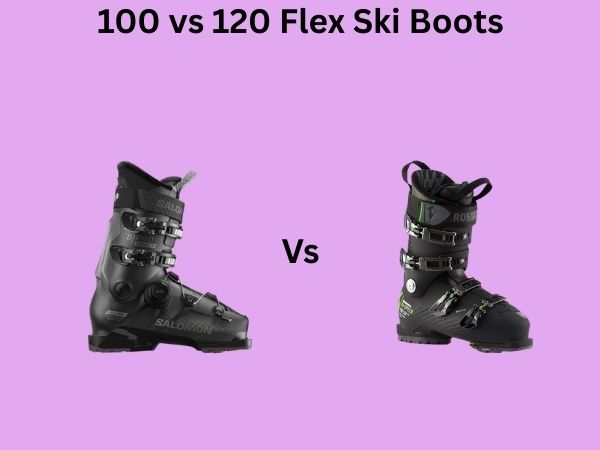
100 vs 120 Flex Ski Boots: Understanding the Differences Between Comfort and Performance
When you’re standing in a ski shop, staring at rows of boots that all look remarkably similar, the question of flex rating can feel overwhelming. Should you go with a 100 flex or a 120 flex ski boot? It’s one of those decisions that might seem minor on the surface, but it can genuinely transform your entire skiing experience. Let me walk you through exactly what these numbers mean and help you figure out which one is right for you.
Understanding Ski Boot Flex Ratings: The Foundation
Before we dive into the specifics of 100 versus 120 flex boots, let’s establish what flex rating actually means. Think of flex rating as a measure of how much resistance a boot provides when you apply forward pressure. A lower number means the boot is softer and easier to bend, while a higher number indicates a stiffer boot that requires more force to compress.
The flex rating is determined by applying a standardized amount of force to the boot and measuring how much it deflects. It’s measured in units, and the system ranges typically from around 60 (very soft) to 130 (extremely stiff). Your boots sit somewhere on this spectrum, and choosing the right spot matters more than you might think.
Why Flex Rating Matters
The flex of your boot directly influences how quickly your skis respond to your movements. Imagine your boot as a translator between your leg muscles and your skis. A softer boot might take a moment to relay your intentions, while a stiffer boot immediately communicates what you’re trying to do. This small difference compounds throughout your day on the mountain.
The 100 Flex Ski Boot: Comfort Meets Capability
A 100 flex boot occupies an interesting middle ground in the ski boot world. It’s not the softest option available, but it’s notably more forgiving than aggressive performance-oriented boots. When you put on a 100 flex boot, you’ll notice it feels less restrictive than what you’d experience with higher flex ratings.
Characteristics of 100 Flex Boots
These boots are designed with a philosophy that prioritizes accessibility without completely sacrificing performance. They’re commonly recommended for intermediate skiers who want decent responsiveness without the learning curve that comes with stiffer boots. The forward lean angle in 100 flex boots is often slightly more forgiving, allowing your lower leg to work in a slightly more natural position.
When you’re wearing 100 flex boots, you’ll notice:
- Less pressure on your shins throughout the day
- Easier initiation of turns, especially at moderate speeds
- More forgiving response to imperfect technique
- Better comfort during long days of skiing
- Reduced leg fatigue compared to stiffer options
Who Should Consider 100 Flex Boots
If you’re an intermediate skier who spends most of your time on groomed runs and varied terrain, a 100 flex boot could be your sweet spot. These boots are particularly suited for skiers who prioritize a full day of comfortable skiing over maximum performance in extreme conditions. They’re excellent for recreational skiers who want to improve their technique without fighting their equipment.
The 120 Flex Ski Boot: Performance-Driven Design
Now let’s talk about the 120 flex boot, which sits in what many consider the advanced performance category. These are noticeably stiffer than their 100 flex counterparts, and that stiffness serves a specific purpose: maximum power transfer and responsiveness.
What Makes 120 Flex Boots Different
A 120 flex boot is engineered for skiers who want their equipment to react immediately to their input. There’s virtually no lag between when you initiate a movement and when your skis respond. This is particularly valuable in challenging conditions where hesitation could compromise your safety or performance.
The distinguishing features of 120 flex boots include:
- Immediate edge engagement and response
- Superior power transfer for aggressive skiing
- Better performance in moguls and variable terrain
- Enhanced control at high speeds
- Increased demand on lower leg and core muscles
- Less forgiveness for technique errors
Who Should Choose 120 Flex Boots
These boots are aimed at advanced and expert skiers who have developed strong technique and muscular endurance. If you’re regularly skiing challenging terrain, spending time in the backcountry, or competing, a 120 flex boot aligns with your abilities and ambitions. These skiers understand that the additional stiffness isn’t a disadvantage—it’s a feature that enables them to ski at their highest level.
How Flex Affects Your Skiing Performance
The difference between 100 and 120 flex might sound like just twenty points on a scale, but in practical terms, it represents a meaningful change in how your skis behave. Let me break down the performance implications.
Turn Initiation and Responsiveness
When you’re carving a turn, you’re essentially bending your boot slightly to apply pressure to the ski’s edge. With a 100 flex boot, this happens smoothly and requires less muscular effort. Your body can achieve the same flex with less exertion, which means you recover faster between turns. With a 120 flex boot, you need more strength to achieve the same amount of flex, but when you do apply that pressure, the response is instantaneous and crisp.
Edge Hold and Stability
Here’s where the stiffness of a 120 flex boot really shines. The increased rigidity means there’s less flex in the cuff and shaft when you’re holding an edge. For intermediate skiers, this might feel constraining at first. But for advanced skiers, this translates to absolute confidence that your boot will deliver exactly what you demand from it. Your skis will carve with precision, and there’s no ambiguity in how they’ll behave.
Comfort Considerations: The Trade-Off You Need to Understand
Here’s the truth that nobody wants to hear: skiing is inherently uncomfortable when you’re pushing yourself. But there’s a difference between the good discomfort of muscle engagement and the bad discomfort of pressure points and fatigue from fighting your equipment.
Shin and Ankle Pressure
A 100 flex boot applies gentler pressure to your shins and ankles. If you’ve ever experienced that raw feeling on your shins after a long day of skiing, you understand why this matters. Softer flex boots distribute pressure more broadly and with less intensity. When you move up to a 120 flex boot, you’re putting your feet and lower legs under more stress. The pressure is concentrated more firmly, which can lead to discomfort if you’re not conditioned for it.
Calf and Lower Leg Fatigue
Your calf muscles work continuously while skiing. They’re responsible for maintaining the pressure that keeps your shins forward in the boot. With softer boots like a 100 flex, your muscles don’t have to work quite as hard to achieve the same performance outcomes. With stiffer 120 flex boots, those same muscles are working harder all day long. Experienced skiers have trained these muscles and don’t notice the difference. Intermediate skiers often feel significant fatigue when moving to a 120 flex boot.
Rider Skill Level and Flex Compatibility
Your ability level is probably the single most important factor in choosing between these two flex ratings. Think of it like choosing a musical instrument—a beginner violinist doesn’t need a professional-grade instrument because they haven’t developed the technique to use it properly.
Intermediate Skiers and 100 Flex
If you’re still developing your technique, a 100 flex boot won’t punish your mistakes the way a 120 flex would. You have room to experiment with different movements and discover what works for your body. The boot’s relative forgiveness means you can progress without feeling frustrated by overly demanding equipment.
Advanced Skiers and 120 Flex
Once you’ve reached an advanced level, a 120 flex boot becomes less of a compromise and more of an asset. Your technique is solid enough that you’re not making significant mistakes that the softer boot would forgive anyway. Instead, you benefit from the responsiveness and power transfer that only comes from a stiffer boot.
Weight and Body Type: A Factor You Can’t Ignore
Here’s something that often gets overlooked: your body weight and physiology influence how flex ratings feel. A heavier skier actually benefits from a stiffer boot because their natural body weight helps achieve the intended flex. A lighter skier might find that same boot too stiff because they can’t naturally compress it through their weight alone.
Lighter Skiers
If you’re on the lighter side, you might find that a 120 flex boot feels unnecessarily rigid. Your body weight isn’t providing enough natural pressure to achieve good flex characteristics, so the boot feels unresponsive. A 100 flex boot might actually feel more appropriate for your weight, giving you better feedback and control.
Heavier Skiers
Conversely, if you’re a heavier skier, your body weight alone might actually under-flex a 100 flex boot. You could find yourself needing the additional stiffness of a 120 flex boot to achieve the desired performance characteristics. This is why many heavier skiers, regardless of skill level, gravitate toward stiffer flex ratings.
Terrain and Skiing Style: Matching Boots to Your Mountain Habits
Not all mountains are created equal, and not all skiers have the same priorities. Where you ski and how you like to ski should absolutely influence your flex choice.
Groomed Run Enthusiasts
If you love smooth, well-groomed runs and rarely venture into challenging terrain, a 100 flex boot is probably your ideal choice. These conditions don’t demand the responsiveness of a 120 flex boot. Instead, they reward efficiency and comfort, both of which a 100 flex boot delivers beautifully.
Variable Terrain and Off-Piste Skiers
When you’re dealing with moguls, variable snow conditions, and challenging terrain, a 120 flex boot becomes much more appealing. The increased responsiveness and edge hold help you adapt quickly to constantly changing conditions. You need your boots to do exactly what you ask immediately, without any delay or forgiveness in the response.
Responsiveness and Control: The Performance Difference Explained
Let me give you a concrete example of how responsiveness differs between these two flex ratings. Imagine you’re carving down a steep mogul run.
With a 100 Flex Boot
You initiate your turn by moving your shin forward and applying pressure. The boot flexes slightly, but because it’s more forgiving, there’s a tiny delay before your ski fully responds. Your edge catches cleanly, but there’s almost a half-second where the ski is getting there. For groomed runs, you’d never notice this. But on moguls, it means you might catch a tip or lose precision.
With a 120 Flex Boot
You make the same movement, and your ski responds instantly. There’s no delay, no questioning whether the edge will hold. This immediate feedback loop allows you to make micro-adjustments more effectively. You can link moguls together with precision because you’re not fighting any lag in your boot’s response.
Energy Transfer and Power: Where Stiffer Wins
Imagine your leg as a shock absorber and a power transmitter simultaneously. When you extend your leg to apply pressure to your ski, you’re transferring energy. A stiffer boot like 120 flex transfers this energy more efficiently because there’s less energy lost to flex.
Power Output Differences
In practical terms, this means that with a 120 flex boot, more of the muscular effort you put in gets transmitted to your ski edge. With a 100 flex boot, some of that energy is absorbed by the boot’s flex. For casual skiers, this difference is negligible. For athletes trying to maximize their output, it’s significant.
Fatigue and Endurance: The Long-Day Consideration
Let’s talk about what happens after eight hours of skiing. Your muscles are tired, your feet might be sore, and your concentration is waning. Which boot is going to feel better?
100 Flex Advantage
A 100 flex boot wins here because you’ve been working less hard all day. Your calf muscles haven’t been as engaged, your shins haven’t been under as much pressure, and your feet haven’t been fighting resistance. At the end of a long day, you’ll have noticeably more energy and less discomfort with a 100 flex boot.
120 Flex and Fatigue
The 120 flex boot demands more from your muscles throughout the day. If you’re well-conditioned, this isn’t a problem—you’re actually stronger because of this engagement. But if you’re not accustomed to the demands, you’ll feel significant fatigue by day’s end. Your legs might feel noodle-like, and even standing up might feel like effort.
Price Differences and Value Consideration
Generally speaking, 120 flex boots are slightly more expensive than 100 flex boots because they’re designed for advanced skiers willing to pay premium prices for performance-oriented equipment. However, this isn’t always a hard rule.
Understanding the Price Premium
When you’re comparing a 100 flex boot and a 120 flex boot from the same manufacturer, the price difference usually reflects materials and manufacturing precision. Stiffer boots often use more advanced materials and tighter tolerances. But the difference isn’t usually dramatic—maybe fifty to a hundred dollars depending on the specific models.
Value for Your Skiing
The real question isn’t whether a 120 flex boot is worth the money in absolute terms. It’s whether the performance benefits align with how you ski. If you’re an intermediate skier, paying extra for a boot you can’t fully utilize is poor value. If you’re an advanced skier, saving money on a softer boot might actually cost you performance and enjoyment.
How to Test Flex Before Buying: A Practical Guide
You can’t truly understand flex until you feel it. Here’s how to test these boots properly before committing to a purchase.
In-Store Testing Techniques
Most ski shops have demonstration areas or at least space where you can stand and apply pressure. Put on both the 100 flex and 120 flex boots. Stand in a forward skiing position and try to bend the