120 vs 130 Ski Boot Flex: Differences Explained for Advanced Skiers
If you’ve spent any time shopping for ski boots, you’ve probably noticed those mysterious numbers like 120 and 130 printed on the side of the boot. These aren’t random digits—they’re flex ratings, and they matter way more than you might think. Whether you’re an advanced skier looking to fine-tune your setup or someone trying to understand what these numbers actually mean, you’ve come to the right place.
The difference between a 120 and 130 flex boot might seem small on paper, but when you’re carving down a steep run or navigating mogul fields, that distinction can completely change how your ski boots respond to your movements. Let me break down everything you need to know about these two popular flex ratings.
What Does Ski Boot Flex Actually Mean?
Before we dive into the specifics of 120 versus 130, let’s establish what flex rating really means. Think of it like this: a ski boot’s flex is similar to how a tree bends in the wind. A rigid tree might snap under pressure, while a flexible tree sways gently. Your ski boot works the same way.
Flex rating measures how much force—usually measured in pounds per square inch or PSI—is required to bend the calf cuff of the boot forward. A lower number means the boot bends more easily, while a higher number means it requires more force to flex. It’s essentially a measure of stiffness and responsiveness.
Understanding the 120 Flex Boot
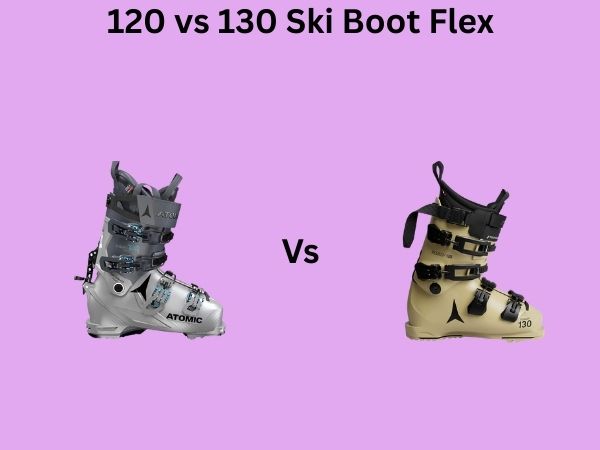
A 120 flex boot sits in the middle-to-upper range for most skiers. It’s stiffer than an all-mountain intermediate boot but not quite as aggressive as the race-oriented boots you’d see on a World Cup slope.
Who Should Choose a 120 Flex Boot?
The 120 flex works beautifully for advanced skiers who want a balance between responsiveness and forgiving characteristics. If you’re someone who spends time on groomed runs but also ventures into powder and light trees, a 120 flex provides that middle ground without forcing you to compromise too much in any direction.
Key Characteristics of 120 Flex Boots
- Easier fore-aft flexing for smooth edge transitions
- More forgiveness when you’re learning advanced techniques
- Better comfort for all-day skiing without excessive fatigue
- Quicker response than softer boots while remaining accessible
- Suitable for varied terrain and snow conditions
When you’re wearing a 120 flex boot, you’ll notice that your inputs translate to the skis more smoothly than they would in a softer boot. There’s less lag, but you’re not fighting against an unyielding wall of plastic either. It’s like driving a car with moderate steering sensitivity—not too twitchy, not too sluggish.
Performance on Different Terrain with 120 Flex
On groomed runs, a 120 flex boot gives you excellent edge control. You can lay down precise carves without the boot providing excessive resistance. In moguls, the moderate flex allows you to absorb impacts while maintaining connection to your skis. When you venture into powder, the boot won’t fight you when you’re trying to move your feet around to adjust your stance.
Understanding the 130 Flex Boot
A 130 flex boot is definitively stiffer. It crosses over into the territory where serious performance becomes the primary focus. These boots are designed for skiers who demand immediate, precise responses from their equipment without any room for mushy compromise.
Who Should Choose a 130 Flex Boot?
The 130 flex is ideal for advanced to expert-level skiers who are comfortable being aggressive on the mountain. If you’re skiing steep terrain regularly, pushing high speeds, or competing in any capacity, a 130 flex boot will give you the support and responsiveness you’re looking for. This flex rating is particularly popular among backcountry skiers who need reliable support in variable conditions.
Key Characteristics of 130 Flex Boots
- Immediate and direct power transmission to skis
- Excellent support for aggressive carving techniques
- Superior control at high speeds
- Reduced flex means less energy absorption by the boot
- Demands precise technique and higher skiing ability
When you step into a 130 flex boot, you immediately feel the difference. The calf cuff is noticeably stiffer. Every micro-adjustment you make with your lower leg translates directly into ski movement. There’s no buffer, no forgiveness—just pure communication between your legs and your skis.
Performance on Different Terrain with 130 Flex
On groomed runs, a 130 flex boot shines. You can make incredibly precise turns and hold edges with confidence. In moguls, the stiffness provides excellent support when landing jumps and making quick directional changes. However, in powder, you might find that the boot’s rigidity works against you slightly, as it doesn’t allow for the subtle stance adjustments that softer boots permit naturally.
The Direct Comparison: 120 vs 130 Flex
Responsiveness and Power Transfer
This is where the most significant difference emerges. A 130 flex boot will transfer your power to the skis faster and more directly. When you make an input, a 130 boots responds immediately without any delay. A 120 flex boot is still very responsive by intermediate standards, but it does have marginally more deflection, which means a fraction of your energy goes into bending the boot rather than turning the ski.
Think of it like the difference between a golf club with a stiff shaft versus one with a regular flex. Both are good, but the stiff shaft delivers more control to someone with a powerful swing.
Learning Curve and Accessibility
Here’s where many skiers make their decision: the 120 flex is more forgiving. If you’re still working on perfecting your technique, the 120 gives you a bit more room for error. The boot absorbs some of your imperfect movements, which means you can continue skiing down the mountain even if your technique isn’t absolutely perfect.
The 130 flex demands better technique. If you’re not executing your movements precisely, the boot will punish you by not responding well. This actually can accelerate your improvement if you’re already an advanced skier, but it can be frustrating if you’re not quite there yet.
Comfort and Fatigue Levels
Comfort is subjective and depends on several factors beyond just flex rating. However, generally speaking, a 120 flex boot might feel slightly more comfortable for all-day skiing because your lower leg muscles don’t have to work as hard to control and flex the boot. A 130 flex will cause more muscle fatigue toward the end of a long day because your muscles are constantly engaged in controlling a stiffer boot.
This doesn’t mean 130 flex boots are uncomfortable—it’s just a different kind of demand on your body.
Cost Considerations
Generally, you won’t see a huge price difference between similarly equipped 120 and 130 flex boots from the same manufacturer. Both are premium, performance-oriented boots. The price variation you’ll encounter typically comes from other features like liner quality, buckle systems, and brand reputation rather than the flex rating itself.
How Your Weight Affects Flex Choice
Here’s something many skiers overlook: your body weight significantly influences how a boot’s flex rating feels. If you weigh 140 pounds, a 120 flex boot might feel appropriately stiff. But if you weigh 210 pounds, that same 120 flex boot might feel almost soft because your weight naturally flexes the boot more.
Manufacturers often design flex ratings with an “average” skier in mind. Heavier skiers often move up in flex rating to compensate for their additional downward force, while lighter skiers sometimes go down in flex rating because they naturally don’t flex the boot as much.
The Weight-to-Flex Formula
A general guideline suggests that for every 20-30 pounds of bodyweight above average, you might want to go up one flex rating. So if you’re significantly heavier than average and considering between 120 and 130, the 130 might be the right choice even if you’re an intermediate-level skier just because you need that additional stiffness to prevent over-flexing.
Ski Ability Level and Boot Selection
Advanced Skiers (120 Flex Option)
If you’re an advanced skier with solid technique, consistent carving ability, and comfort on steep terrain, a 120 flex boot gives you a versatile platform. You’re skilled enough to take advantage of the boot’s responsiveness while sophisticated enough to manage the slightly forgiving nature of the lower flex rating.
Expert Skiers (130 Flex Option)
Expert-level skiers who ski aggressively, frequently tackle steep terrain, or engage in any form of competitive skiing will typically prefer the 130 flex. At this level, you have the technique to control the boot’s stiffness, and you benefit from the direct power transfer and support that comes with it.
Terrain-Specific Performance Analysis
Groomed Runs
Both boots excel on groomed terrain, but the 130 flex gives you a slight edge in precision and edge control. You can lay down sharper, more defined carves with immediate response. The 120 flex is still very good—you’re just not gaining that extra degree of sharpness.
Mogul Fields
Mogul skiing puts a premium on quick directional changes and landing support. The 130 flex excels here because it provides excellent support during impacts and responsive directional control between bumps. The 120 flex is perfectly adequate, but the stiffer boot gives you a slight advantage in this demanding terrain.
Powder and Ungroomed Snow
This is where the 120 flex actually has a potential advantage. When you’re skiing in deep snow, the ability to flex the boot and adjust your stance more easily becomes valuable. The 130 flex’s stiffness can sometimes make it harder to make micro-adjustments in powder. That said, expert skiers often prefer even stiffer boots because they know how to compensate through movement and stance adjustment.
Steep Terrain
When the pitch increases and exposure becomes real, most serious skiers prefer the 130 flex. The support and immediate response are invaluable when you’re dealing with less margin for error. The 120 flex works fine, but the extra stiffness provides psychological confidence and tangible performance benefits on truly steep slopes.
The Role of Boot Liner Technology
Here’s something important that changes the game: modern boot liners can significantly affect how the flex rating translates to actual feel on the mountain. A high-quality, custom-molded liner in a 120 flex boot might feel stiffer and more responsive than a basic liner in a 130 flex boot.
The liner acts as the interface between your foot and the boot’s shell. A well-designed, dense liner transmits power more efficiently, which partially compensates for lower flex ratings. If you’re considering the switch from 120 to 130, upgrading your liner might be a more cost-effective way to increase responsiveness without changing flex ratings.
Testing Before You Buy
The best way to understand the difference between 120 and 130 flex is to actually ski in both. Many ski shops offer demo programs where you can rent boots of different flex ratings and test them on the same terrain under similar conditions. Pay attention to how your lower leg feels, how quickly the boot responds to your movements, and whether you feel over-controlled or under-controlled.
What to Pay Attention to During a Demo
- How quickly the boot responds to your edge changes
- Whether you feel the boot supporting you or fighting you
- How your calf muscle feels after several hours
- Your confidence level when skiing aggressively
- How the boot performs on varied terrain, not just groomed runs
Maintenance and Durability Across Flex Ratings
You might wonder if stiffer boots wear differently than softer ones. Generally, no. Both 120 and 130 flex boots, if made by reputable manufacturers, will have similar durability characteristics. The plastic shell, liners, and buckles degrade based on use frequency and care rather than flex rating.
Properly maintained boots of either rating should last several seasons. Store them in a cool, dry place when not in use, keep the liners clean and dry, and have them professionally inspected annually for cracks or damage.
Making Your Final Decision
Choosing between 120 and 130 flex comes down to a few key factors: your skiing ability, your body weight, the terrain you ski most frequently, and what you’re trying to achieve with your equipment. If you’re an advanced skier who wants versatility and forgiveness without sacrificing responsiveness, go with the 120. If you’re an expert skier who demands maximum performance and control, the 130 is your answer.
Remember that flex rating is just one piece of the boot puzzle. Fit, liner quality, buckle design, and forward lean all contribute to how a boot performs. Don’t get so fixated on the flex number that you neglect other important characteristics.
Conclusion
The difference between 120 and 130 ski boot flex is real and measurable, but it’s not a chasm that separates good skiers from bad ones. It’s more like choosing between two high-performance vehicles—both will get you where you want to go, but each has its strengths and best-use scenarios.
A 120 flex boot offers advanced skiers a responsive, versatile platform that doesn’t demand perfection with every turn. It’s forgiving enough to let you experiment and improve while still being stiff enough to feel connected and in control. The 130 flex, by contrast, rewards expert technique with immediate, precise responses and excellent support in demanding situations.
Your decision should be based on where you are in your skiing journey, how much you weigh, what terrain you love, and what you want to achieve on your skis. If you’re still climbing the skill ladder, the 120 flex provides more room for growth. If you’ve already mastered advanced techniques and want to push harder, the 130 flex will support those ambitions.
Whatever you choose, make sure the boots fit properly, invest in good liners, and spend time actually skiing in them before making a final judgment. Your feet will thank you, and your skiing will improve as a result of equipment that truly matches your abilities and aspirations.
Frequently Asked Questions
Can a beginner or intermediate skier successfully use a 130 flex boot?
Technically yes, but it’s not recommended. A 130 flex boot demands precise technique and strong lower leg muscles to control effectively. A beginner or intermediate skier would likely fight against the boot’s stiffness, leading to fatigue and frustration. Additionally, the boot won’t forgive technical mistakes, which could hinder your learning progress. Stick with softer boots (100-110 flex) as a beginner and progress to 120 flex once you’ve mastered consistent carving on steep terrain.
How much weight does flex rating really matter compared to boot fit?
Boot fit is actually more important than flex rating. A poorly fitting boot of any flex rating will cause discomfort, blisters, and performance issues. A well-fitting 120 flex boot will outperform a poorly fitting 130 flex boot every single time. Focus on finding a boot