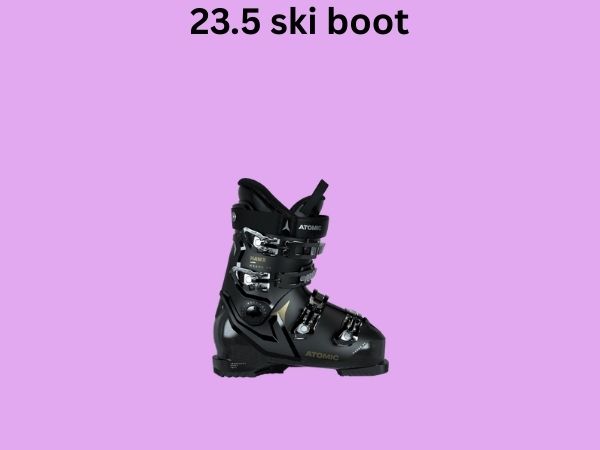
23.5 Ski Boot: What Shoe Size Is It? A Complete Sizing Guide
Have you ever stared at a ski boot size chart and felt completely confused? You’re definitely not alone. The world of ski boot sizing can feel like deciphering a foreign language, especially when you encounter measurements like 23.5. Let me break this down for you in a way that actually makes sense.
Understanding Ski Boot Sizing Systems
Here’s the thing about ski boots: they don’t follow the same sizing conventions as your regular street shoes. Unlike sneakers or dress shoes that use US sizes, European sizes, or UK sizes exclusively, ski boots employ a specialized measurement system. This system was created because ski boots need to be incredibly precise and functional, where comfort and performance are literally a matter of safety on the slopes.
The primary system used for ski boots is called Mondopoint, which measures the length of your foot in millimeters. Think of it as the most objective way to measure a foot, regardless of which country you’re in. It’s like how clothing designers use centimeters instead of inches for international patterns.
What Does 23.5 Mean in Ski Boot Measurements?
A 23.5 ski boot size refers to the Mondopoint measurement, which simply means that the inner length of the boot is 23.5 centimeters, or about 235 millimeters. Imagine measuring your foot from the very tip of your longest toe to the back of your heel with a ruler, and that measurement came out to be 23.5 cm. That’s exactly what this number represents.
Now, here’s where it gets interesting: 23.5 is considered a relatively small to medium ski boot size. It’s the kind of size you’d typically encounter among youth skiers, petite adults, or individuals with naturally smaller feet. This measurement is specific and precise, which is why ski boots are so much more accurate than regular shoe sizing.
The Precision Behind the Number
The reason ski boots use such precise measurements is functional. Your feet need to be held firmly and securely in a ski boot because you’re controlling a piece of equipment at potentially high speeds while navigating varied terrain. A loose boot could lead to poor control and potential injury, while an overly tight boot could cut off circulation and cause severe discomfort.
Converting 23.5 Ski Boot Size to Standard Shoe Sizes
Now we’re getting to the practical question: what shoe size is this in regular measurements? A 23.5 Mondopoint ski boot typically corresponds to approximately a US women’s size 5 to 5.5, sometimes ranging to a US women’s size 6 depending on the specific brand and model.
For men’s sizing, this would be closer to a US men’s size 3 to 3.5, though men’s ski boots this small are relatively rare since most adult men have larger feet. For European sizing, you’re looking at approximately an EU size 36 to 37 for women.
Why Conversions Can Vary Between Brands
Here’s something important to understand: different ski boot manufacturers interpret the Mondopoint measurement slightly differently when it comes to internal volume and shape. One brand’s 23.5 might feel slightly roomier than another brand’s 23.5. This is similar to how a size 8 from one clothing brand might fit differently than a size 8 from another brand.
Additionally, some brands add extra padding or insulation, which affects how the boot fits. This means you can’t just assume a 23.5 will feel identical across all manufacturers.
The Mondopoint System Explained
Let me take a moment to really explain this system, because understanding it will help you shop for ski boots with confidence. The Mondopoint system was established by the International Organization for Standardization (ISO) to create a universal, consistent way to measure footwear, particularly for technical sports equipment.
In this system, sizes increase in half-centimeter increments. So you might see 23.0, 23.5, 24.0, 24.5, and so on. Each increment represents an additional 5 millimeters of foot length. While this might seem like a tiny difference, when you’re wearing boots that need to be snug and supportive, even 5 millimeters can make a noticeable difference in comfort and performance.
- 23.0 cm = 230 mm
- 23.5 cm = 235 mm
- 24.0 cm = 240 mm
- 24.5 cm = 245 mm
How 23.5 Compares to US, EU, and UK Sizes
Let me create a clear comparison for you. When you see a ski boot labeled as 23.5 Mondopoint, here’s how it translates:
- US Women’s Sizing: Approximately size 5 to 5.5
- US Men’s Sizing: Approximately size 3 to 3.5
- European Sizing: Approximately size 36 to 37
- UK Sizing: Approximately size 2.5 to 3.5
- Japanese Sizing: Approximately size 23 to 24
These conversions are approximate because different sizing systems overlap and don’t correspond perfectly. It’s why many ski shops keep conversion charts readily available. The wonderful thing about Mondopoint is that once you know your measurement, you know your size regardless of what country you’re shopping in.
Regional Differences in Boot Standards
Interestingly, some European manufacturers might size their boots slightly larger or smaller than the strict Mondopoint standard, while American brands typically adhere more closely to it. This is another reason why trying boots on before purchasing is strongly recommended when possible.
Why Ski Boots Use Different Sizing
You might be wondering: why can’t ski boots just use regular shoe sizes like everything else? The answer lies in the specific demands of skiing. When you’re skiing, your foot needs to be held in a precise position, with minimal movement inside the boot, to maintain control and prevent injury. Regular shoe sizing systems don’t provide the level of standardization and precision required for this.
Think about it this way: a regular shoe size 5 from Nike might be slightly different from a size 5 from Adidas. But a ski boot’s 23.5 measurement is consistent across the entire industry because it’s based on an objective millimeter measurement rather than subjective brand interpretation.
Additionally, ski boots are engineered products where fit affects safety and performance. The Mondopoint system allows engineers and designers to work with precise specifications, knowing exactly how much internal volume they have to work with.
Finding Your Perfect Ski Boot Fit
Now that you understand what 23.5 means, let’s talk about whether it’s the right size for you. Finding your perfect ski boot size involves more than just knowing your regular shoe size. You need to think about your actual foot length, foot width, and the thickness of socks you’ll be wearing.
Measuring Your Foot Correctly
Here’s how to measure your foot like a ski shop professional would:
- Stand on a piece of paper with your weight distributed evenly on both feet
- Mark the tip of your longest toe with a pen
- Mark directly below your heel
- Measure the distance between these two marks in centimeters
- Repeat with your other foot, as most people have slightly different foot sizes
- Use the larger measurement as your ski boot size
Once you have this measurement, you know your Mondopoint size. If your measurement is 23.5 cm, then you’re looking at a 23.5 ski boot size.
The Room Factor
Here’s something crucial that many beginners don’t realize: your ski boot should actually be slightly larger than your exact foot measurement. When you’re in a ski boot with thick ski socks, you need just a tiny bit of room for circulation. However, you don’t want so much room that your foot slides around inside the boot.
Most ski experts recommend approximately 1 to 1.5 centimeters of space beyond your longest toe when wearing ski socks. So if your foot measures 23.5 cm, you might actually want a 24.0 or 24.5 boot depending on the brand and the thickness of your socks.
The Importance of Professional Fitting
I cannot stress this enough: getting professionally fitted for ski boots is one of the best investments you can make in your skiing experience. A professional ski fitter has experience with hundreds of different feet and boots, and they understand the nuances that matter for comfort and performance.
When you visit a professional ski shop, they’ll measure your feet using a Brannock device, which is the gold standard for foot measurement. They’ll consider your foot width, any unusual foot shapes, and your specific skiing style and ability level. They can recommend specific boots that work well for your foot shape, not just your size.
What to Expect at a Fitting Session
- Professional foot measurement using calibrated tools
- Discussion of your skiing style and experience level
- Assessment of foot width and arch type
- Trying on multiple boot models in your size range
- Walking around the shop to test comfort and fit
- Advice on socks and potential custom insoles
- Information about heat molding options if needed
Common Sizing Mistakes to Avoid
Let me share some mistakes I’ve seen people make when selecting ski boots, so you can avoid them:
Mistake One: Assuming Your Street Shoe Size Applies
Your regular shoe size and your ski boot size might be entirely different. Someone who wears a US size 8 shoe could need a 26.0 or 26.5 ski boot. Don’t rely on your typical shoe size when shopping for ski boots.
Mistake Two: Buying Boots That Are Too Large
This is incredibly common among beginners. People worry about discomfort and buy boots that are too roomy. Loose boots lead to poor control, increased edge catching, and actually more discomfort because your foot bounces around inside the boot with every movement.
Mistake Three: Ignoring Foot Width
A 23.5 boot that’s designed for narrow feet will feel terrible on someone with wider feet, even if the length is correct. Reputable ski boot brands offer different width options, often labeled as regular, wide, or extra-wide.
Mistake Four: Not Considering Socks
Wearing regular thick cotton socks with ski boots is a recipe for cold, uncomfortable feet. Specialized ski socks are thinner and made from merino wool or synthetic materials. The thickness of your socks affects how snugly a boot fits, so always try boots on with the socks you plan to wear.
Width Considerations for Ski Boots
Width is just as important as length when it comes to ski boot fit, yet it’s often overlooked. A boot that’s the perfect length but too narrow will cause pressure points and restrict circulation. Conversely, a boot that’s too wide will allow your foot to slide around, compromising control.
Most ski boot manufacturers recognize this and offer boots in different widths. A 23.5 boot might be available in regular, wide, or extra-wide versions. Some brands, like Salomon and Atomic, have built reputations for offering excellent options for different foot widths.
How to Determine Your Foot Width
When a professional fits your boots, they’ll measure your foot width at the widest point (typically across the ball of your foot). They might use terms like narrow, medium, or wide. If your foot width is wider than average, make sure to request wide or extra-wide options in the 23.5 size.
Breaking In Your New Ski Boots
Once you’ve got your perfectly fitted 23.5 ski boots, you might notice they feel snug or even slightly uncomfortable when you first put them on. This is normal and doesn’t necessarily mean they’re the wrong size. Ski boots require a break-in period, and there are strategies to make this process more comfortable.
The Break-In Process
- Wear your boots around the house for short periods initially
- Gradually increase wearing time before your first day on the slopes
- Use heat molding if your boots offer this feature
- Consider professional heat molding at a ski shop if needed
- Use padded insoles or custom insoles for additional comfort
- Have a professional make minor adjustments if pressure points develop
Many modern ski boots offer heat molding technology where the boot’s inner lining can be heated to conform better to your foot’s unique shape. This can make a huge difference in comfort without requiring any permanent modifications.
When to Size Up or Down
So you’ve measured your foot and got 23.5 cm. Should you stick with 23.5, or should you consider 23.0 or 24.0 instead? Here’s how to think about this decision:
When to Consider Sizing Down to 23.0
- If you prefer an extremely snug fit and will wear thin socks
- If you have a very narrow foot and find 23.5 too loose
- If you’re an aggressive skier who prioritizes control over comfort
When to Consider Sizing Up to 24.0
- If you’ll be wearing thicker ski socks
- If you have a wider than average foot
- If you prefer a bit more room for comfort, especially for long ski days
- If you plan to wear custom insoles
The general guideline is that you want just enough room to insert your finger between your heel and the back of the boot when wearing your ski socks, but not so much room that your foot slides forward.
Seasonal Changes and Sock Thickness
Here’s something that surprises many people: the thickness of your socks actually matters for boot fit. In winter, you might wear thicker socks for warmth, while on milder ski days, you might prefer thinner socks. This