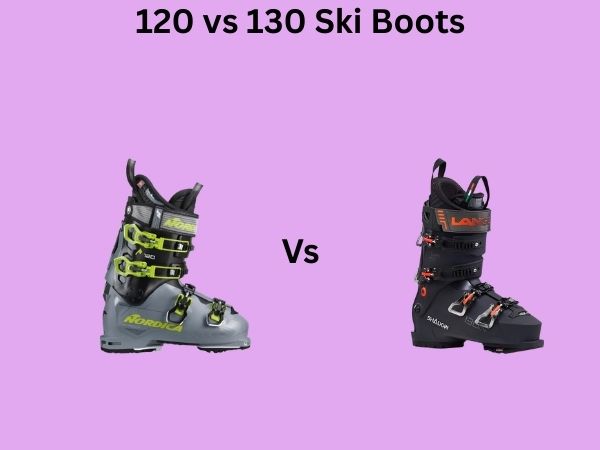
120 vs 130 Ski Boots: Performance, Comfort & Fit Compared
When you’re standing in a ski shop, staring at rows of boots with different flex ratings, you might wonder what the heck those numbers actually mean. Are you really that different from someone wearing 120 flex boots if you’re looking at 130s? The truth is, this choice can make or break your entire skiing experience, and I’m here to help you understand exactly what you’re getting into.
Ski boot flex ratings are kind of like the volume control on a speaker—they determine how responsive and demanding your equipment will be. But unlike a volume knob, getting this wrong won’t just annoy you; it’ll affect your comfort, control, and confidence on the mountain. Let me walk you through everything you need to know.
What Does Flex Rating Actually Mean?
Here’s the thing about ski boot flex ratings: they’re measured by how much force it takes to bend the boot’s calf area backward. Think of it like trying to bend a plastic straw—some straws are really flexible and bend easily, while others are stiffer and require more pressure. A 120 flex boot bends more easily than a 130 flex boot, and that difference actually matters quite a bit.
The flex rating is tested under very specific conditions in laboratories, but here’s where it gets interesting: different manufacturers sometimes have slightly different standards. So a 120 from one brand might feel a bit different from a 120 from another brand. It’s not a perfect science, but it’s the best system we’ve got.
The Scale and What It Represents
Ski boots typically range from around 60 flex (super soft, great for beginners) all the way up to 150 or higher (incredibly stiff, designed for aggressive racers). Most recreational skiers fall somewhere between 100 and 130, so we’re really looking at the middle-to-upper portion of the spectrum here.
120 Ski Boots: The Sweet Spot for Many Skiers
I’d argue that 120 flex boots have become the default choice for a huge portion of the skiing population, and there are some solid reasons why. They’re not too soft and not too stiff—they hit that Goldilocks zone that works for intermediate to advanced skiers who want responsiveness without needing to be an athlete.
Advantages of 120 Flex Boots
- Easier to break in: Your feet won’t hate you after day one. The flex is forgiving enough that the boot adapts to your foot shape without feeling like you’re torturing yourself.
- Better for varied terrain: Whether you’re carving groomers, cruising through moguls, or navigating variable snow conditions, 120s give you enough control without being overly demanding.
- Lower injury risk: A boot that’s too stiff forces your legs to work harder, which can lead to fatigue and potentially risky mistakes toward the end of a long day.
- Affordable options: Most manufacturers offer competitive pricing in the 120 range because it’s such a popular choice.
Potential Drawbacks of 120 Boots
Now, before you think 120s are perfect for everyone, let me be honest about the downsides. If you’re an aggressive skier who pushes hard on every run, you might find that 120 boots lack the precision and response you want. The boot flexes more readily, which means less direct energy transfer to your skis. For some skiers, this feels mushy or imprecise.
- Less edge control at high speeds: When you’re carving hard and pushing your limits, the softer flex can feel like it’s delaying your commands to the skis.
- Potential for overpronation: If you have a tendency to roll your ankles inward, the softer flex might not prevent this as effectively.
- Reduced feedback: You might not feel the snow and terrain changes as directly through your feet.
130 Ski Boots: The Choice for Aggressive Skiers
Now let’s talk about 130 flex boots. These are the tougher cousins in the boot family, designed for skiers who want maximum responsiveness and are willing to put in the physical effort to work with a stiffer boot.
Advantages of 130 Flex Boots
- Superior edge control: The stiffer calf means your commands translate directly to your skis. When you want to initiate a turn, it happens immediately.
- Better for high-speed skiing: If you’re bombing down the mountain or making aggressive carves, the 130 flex gives you the precision and stability you need.
- Improved ankle support: The stiffer construction provides more lateral support, which is great if you have weaker ankles or prefer a locked-in feel.
- Consistent response: Throughout the day, as your feet get fatigued, the stiffer boot maintains its characteristics better than a softer boot.
- Better for heavier skiers: If you carry more weight, a stiffer boot flexes appropriately under your body weight where a softer boot might be too compliant.
Disadvantages of 130 Flex Boots
Here’s the catch with 130s: that extra stiffness comes at a price. Your feet and legs will work harder. For some skiers, this is exactly what they want. For others, it’s a recipe for discomfort and early fatigue.
- Longer break-in period: Your feet might be sore for the first several days of skiing as the boot breaks in.
- Requires more strength: If you’re not a strong skier or you’re still developing technique, you might find yourself exhausted by midday.
- Less forgiving on mistakes: The stiff boot doesn’t absorb impact as well, so rough terrain or landing a jump awkwardly transfers more shock to your joints.
- Can be uncomfortable for some foot shapes: If you have sensitive feet or certain foot problems, the stiffness might create pressure points that bother you all day.
- Overkill for resort cruising: If you mostly ski groomed runs at moderate speeds, you’re paying for performance you won’t use.
Comparing Performance on the Mountain
Carving and Turn Initiation
Let me paint a picture for you. Imagine you’re on a blue run with nicely groomed snow, and you want to make a perfect carve. With 120 boots, you’ll feel the flex respond to your leg pressure, and your edge will bite into the snow—but there’s a slight delay between your intent and the skis’ response. With 130 boots, it’s snappier. The boot transfers your weight and angle almost instantaneously to your skis. If precision is your priority, 130s win this round.
Mogul Navigation
Moguls are a different beast entirely. Those bumps demand quick reactions and the ability to absorb impacts. A 120 flex boot actually has an advantage here because it flexes more readily, absorbing some of the shock. Your legs do less work, and you can maintain rhythm through a mogul field longer. The 130 boot will feel more tiring in moguls because every bump sends vibration up through your stiffer boot.
Deep Snow and Off-Piste
In deep powder, the flex rating matters less than other factors like boot width and design. However, the 120 flex’s forgiving nature might actually help you stay more relaxed, which improves your technique in untracked snow. The 130 flex doesn’t hurt you here, but it doesn’t particularly help either.
Comfort Comparison: What You’ll Actually Feel
Here’s something nobody talks about enough: comfort isn’t just about softness. It’s about fit, liner quality, and how well the boot works with your specific foot shape. That said, flex does play a role.
Initial Comfort
The first day you put on 120 flex boots, your feet will probably feel pretty good. The softer flex means less pressure overall. Fast forward to 130 boots, and you might notice more pressure around your ankle and shin. This isn’t necessarily bad—it’s direct contact that lets you feel what your skis are doing.
All-Day Comfort
By hour four of skiing, most skiers with 120 boots are still relatively comfortable. With 130 boots, if they’re not properly fitted, your shins might be barking. The law of diminishing returns applies here—the stiffer the boot, the more important a perfect fit becomes.
End-of-Day Fatigue
After a full day of skiing, skiers in 130 flex boots typically experience more leg fatigue because their muscles had to work harder to flex the boot. For intermediate skiers, this fatigue can actually hurt your skiing on the last few runs when technique deteriorates. Advanced skiers might not notice this as much because they’re stronger.
Which Boot Should You Choose?
Choose 120 Flex If You Are:
- An intermediate to advanced skier (not a beginner, but not an all-mountain speed demon either)
- Someone who values comfort and plans to ski multiple days in a row
- A lighter-weight skier or someone with average-to-below-average leg strength
- A skier who spends significant time in moguls or variable terrain
- Just getting into skiing and want to progress without fighting your equipment
- Looking for a versatile boot that handles most conditions well
Choose 130 Flex If You Are:
- An advanced or expert skier who wants maximum responsiveness
- A heavier-weight skier who needs a stiffer boot under your bodyweight
- Someone who prioritizes edge control and precise carving
- A skier who primarily uses groomed runs and high-speed terrain
- Strong in the legs and able to handle the physical demands
- Willing to deal with a longer break-in period for better performance
- Someone who skis aggressively and wants immediate feedback from your equipment
The Fit Factor: Why This Matters More Than Flex
Here’s something crucial that I need to emphasize: the fit of the boot is actually more important than whether you choose 120 or 130. A poorly fitting 120 boot is worse than a perfectly fitting 130 boot. Seriously.
When you’re shopping for boots, spend time at a proper boot fitter. They’ll measure your foot, check your ankle width, and see how your foot moves. They might heat mold the liner, adjust the insole, or make other modifications. This is where the real magic happens.
Getting a Proper Boot Fit
A good boot should feel snug around your midfoot and heel without being painfully tight. Your toes should have about a thumb’s width of space in front. When you flex forward, your heel shouldn’t lift, and your foot shouldn’t slide around. The calf and ankle area should feel supportive but not cutting off circulation.
If your 120 or 130 boot doesn’t fit well, no amount of flex adjustment will make it comfortable. It’s worth the extra money to get professionally fitted.
Flex Rating and Your Weight
Your body weight plays a significant role in how a boot feels. A 130 flex boot under a 220-pound skier will feel different than the same boot under a 140-pound skier. The heavier person’s weight naturally flexes the boot more, making it feel relatively softer than it would for a lighter person.
This is one reason why heavier skiers should consider stiffer boots—what feels like 130 flex to them might feel like 110 to a lighter person. Conversely, very light skiers might actually be better served with softer boots because they won’t have enough weight to properly flex a stiffer boot.
The Break-In Period: What to Expect
120 Flex Break-In Timeline
Most skiers can start using 120 flex boots within the first day or two. The liners compress quickly, and the boot shell softens up. By your third or fourth day of skiing, the boots should feel pretty comfortable.
130 Flex Break-In Timeline
Expect a longer process here. Many skiers need a full week of skiing before 130 boots start to feel normal. The first two days can be uncomfortable, and pushing through this phase requires commitment. Some people eventually love their 130s; others decide the break-in wasn’t worth it and switch to 120s.
Skiing Conditions and Flex Ratings
The snow conditions you encounter can influence which flex is better for you. Hard, icy conditions demand responsiveness, which favors 130. Soft snow and moguls favor the shock absorption of 120. If you ski in diverse conditions throughout the winter, a 120 might be more versatile.
Conclusion
The choice between 120 and 130 ski boots isn’t about one being objectively better—it’s about matching the boot to your skiing style, body type, strength level, and comfort preferences. A 120 flex boot is an excellent choice for most recreational and intermediate-advanced skiers. It offers great versatility, reasonable comfort, and solid performance across varied terrain. A 130 flex boot shines for aggressive advanced skiers who want maximum precision and are willing to put in extra physical effort.
Before you make your final decision, remember that getting properly fitted by an expert is more important than the flex rating itself. Spend the time to find a boot that fits your foot perfectly, and then choose the flex that matches your skiing level and style. Your feet and your performance will thank you.
Don’t get caught up in the numbers game or what other skiers are using. What matters is what works for you on the mountain. Try both options if you can, spend a full day in each, and see which one makes you feel more confident and comfortable. That’s your answer.
Frequently Asked Questions
Is 120 or 130 flex better for a beginner skier?
For beginners, I’d recommend looking even softer than 120 flex. Most beginners should consider boots in the 100-110 range. However, if you’re progressing quickly and have some athletic background, 120 can work. Avoid 130 as a beginner because the stiffness will tire you out and make learning harder. Your focus should be on developing technique, not fighting your equipment.
Can I use 130 flex boots if I’m lightweight?
Yes, but you’ll need to be aware that 130 flex boots under your lighter bodyweight might not flex as much as they do under a heavier person, so they’ll actually feel stiffer than they would for someone heavier. This can be good if you want maximum control, but it also means the break-in period might be more uncomfortable. Make sure you get properly fitted.
How long do ski boots last before I need to replace them?
Quality ski boots typically last 100-150 days of skiing if well-maintained. The liners compress over time, and the shell can develop stress cracks. Most recreational skiers replacing their boots every 5-7 years is reasonable. The flex rating doesn’t change significantly over the boot’s life