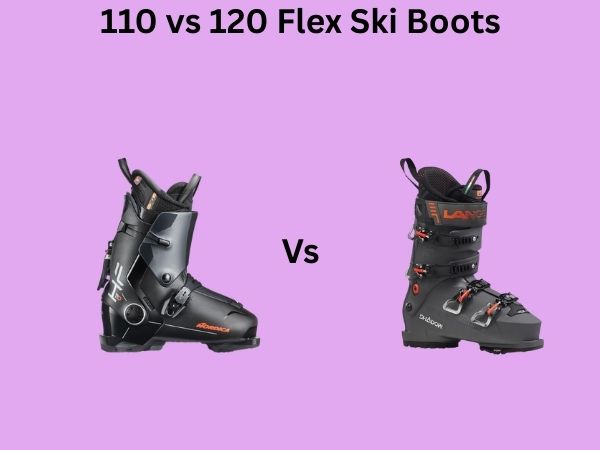
110 vs 120 Flex Ski Boots: Which Should You Choose?
If you’re standing in a ski shop staring at rows of boots with different flex ratings, you’re probably wondering what the heck “flex” actually means and why it matters so much. Trust me, I’ve been there. The difference between a 110 and 120 flex ski boot might sound like splitting hairs, but once you understand what’s really going on, you’ll realize it can completely transform your skiing experience. Let me walk you through everything you need to know.
Understanding Ski Boot Flex: The Foundation
Think of flex rating like the stiffness of a diving board. A stiffer board requires more force to bend, while a flexible one moves easily with minimal pressure. Ski boot flex works the same way. The number—whether it’s 110 or 120—tells you how much resistance the boot’s calf section provides when you apply forward pressure. Higher numbers mean stiffer boots that demand more effort to flex, while lower numbers indicate softer, more forgiving boots.
The flex rating is measured by how much force (in kilograms) is needed to bend the boot cuff forward by one centimeter. This standardized measurement helps skiers understand exactly what they’re getting, though real-world conditions can vary slightly depending on the manufacturer.
Why Does Flex Rating Matter?
Your boot’s flex rating directly impacts how responsive your skis are to your movements. A boot with the wrong flex rating is like wearing shoes that don’t fit properly—sure, you can walk, but everything feels off. The right flex helps you control your skis more efficiently, maintain better balance, and respond quickly to changing terrain. Getting this wrong can lead to fatigue, frustration, and even injury.
The 110 Flex Ski Boot: Perfect for Certain Skiers
A 110 flex boot sits on the softer side of the intermediate range. These boots are more forgiving and require less effort to bend forward, making them ideal for specific types of skiers.
Who Should Choose 110 Flex Boots?
- Lighter-weight skiers: If you weigh less than 160 pounds, you’ll generate less force when skiing, so a softer flex allows you to engage with your skis more easily without fighting the boot
- Beginner to intermediate skiers: These boots are more forgiving and make it easier to learn proper technique without battling stiff equipment
- All-mountain recreational skiers: If you’re not pushing yourself to the limit every run, you might prefer the comfort and ease of a softer boot
- Skiers with flexibility limitations: Tight calves or ankle issues? A softer boot means less strain and discomfort
- Those prioritizing comfort over performance: Some skiers just want to enjoy the mountain without feeling like they’re fighting their gear
Advantages of 110 Flex Boots
The main advantage of 110 flex boots is responsiveness at lower speeds. You don’t need to be a powerhouse to make these boots work for you. They’re also generally more comfortable straight out of the box since they don’t require as much calf strength to operate. If you’re recovering from an injury or have limited lower leg strength, these boots are gentler on your body.
Additionally, 110 flex boots often come with a lower price tag than stiffer options, making them an excellent choice for budget-conscious skiers who don’t want to compromise too much on performance.
Disadvantages of 110 Flex Boots
Here’s where things get tricky. If you’re a heavier skier or you’re pushing your speed and technical ability, softer boots become a limitation. They can feel mushy at high speeds, making it harder to carve sharp turns or maintain control on icy conditions. It’s like trying to steer a squishy car—the inputs feel delayed and imprecise.
You might also find that as you improve, you outgrow 110 flex boots fairly quickly, meaning you’ll need to replace them sooner than expected.
The 120 Flex Ski Boot: Built for Demanding Skiers
Moving up to 120 flex, you’re entering the territory where precision and responsiveness take priority. These boots are significantly stiffer and demand more from the skier, but they deliver in return.
Who Should Choose 120 Flex Boots?
- Heavier-weight skiers: If you’re over 180 pounds, you’ll naturally generate more force, and you need a stiffer boot to provide proper support and control
- Advanced and expert skiers: Once you develop proper technique and want to push your limits, stiffer boots give you the precision you need
- Aggressive skiers: If you love carving hard turns, skiing at high speeds, or tackling steep terrain, 120 flex boots are your ally
- Off-piste and backcountry enthusiasts: Deeper snow and technical terrain demand boots that don’t give way under pressure
- Those seeking long-term investment: Stiffer boots grow with your abilities, so you won’t outgrow them as quickly
Advantages of 120 Flex Boots
The most obvious advantage is edge control and precision. When you need to carve a tight turn on a mogul run or hold your line on an icy slope, these boots deliver. They’re responsive at all speeds, giving you immediate feedback from your skis. It’s the difference between a responsive sports car and a family sedan—you feel everything the skis are doing.
Stiffer boots also provide better support during aggressive movements, which means less fatigue in your legs and ankles during long ski days. You’re working smarter, not harder, because the boot is doing its job properly.
Disadvantages of 120 Flex Boots
Let’s be honest: 120 flex boots are demanding. If you’re a lighter skier or still developing your technique, they can feel unresponsive. You’ll fight the boot to make it flex, leading to leg fatigue and frustration. It’s like trying to drive a manual transmission car when you’ve only ever driven automatic—everything requires more conscious effort.
They’re also typically more expensive, and the comfort level straight out of the box tends to be lower. You might need professional fitting and adjustments to make them feel right.
Direct Comparison: 110 vs 120 Flex Boots
Performance Differences
The performance gap between 110 and 120 flex boots becomes noticeable as you increase speed. At slow, cruising speeds on groomed runs, many intermediate skiers won’t feel a huge difference. But once you start carving harder, hitting moguls, or tackling steep terrain, the 120 flex boot’s superior stiffness shines through.
Think of it this way: a 110 flex boot is like a smartphone with decent specs, while a 120 flex boot is like a professional camera. Both take pictures, but one is clearly superior for demanding situations.
Comfort and Fit
Generally speaking, 110 flex boots are more comfortable right out of the box. They don’t require your legs to work as hard, and they’re often easier to get into and out of. However, comfort is highly individual and depends on your specific foot shape, calf volume, and sizing.
The 120 flex boots might feel restrictive initially, but after proper fitting and a break-in period, they can feel equally comfortable once your legs adapt to the support level.
Weight Considerations
Your body weight is one of the most important factors in choosing between these two options. A general rule of thumb is:
- Under 160 lbs: 110 flex is likely sufficient
- 160-200 lbs: Either could work depending on skill level
- Over 200 lbs: 120 flex or higher is probably necessary
However, this isn’t carved in stone. A 150-pound aggressive expert skier might prefer 120 flex, while a 190-pound intermediate skier might be happier with 110 flex.
Price Comparison
Typically, 110 flex boots cost anywhere from $300 to $500, while 120 flex boots range from $400 to $700. The price difference reflects the additional technology and materials used in stiffer boots. That said, both options are available at various price points, so you don’t necessarily need to spend more for better quality in either category.
Skill Level Considerations
Beginners and Early Intermediate
If you’re just learning to ski, I’d recommend starting with 110 flex boots. Your technique is still developing, and you need boots that respond to the forces you’re actually generating. Jumping into 120 flex boots too early can be discouraging because you’ll feel like you’re fighting the equipment rather than learning to control it.
Mid to Advanced Intermediate
This is where things get interesting. If you’ve been skiing for several years and can confidently handle any groomed run plus some off-piste terrain, you might be ready to make the jump. Test both options if possible. Many ski shops offer demo programs where you can take boots out for a run to see how they feel.
Advanced and Expert Skiers
At this level, 120 flex is typically the minimum. You’ve developed the leg strength and technical ability to benefit from stiffer boots, and you probably won’t feel limited by them. Many advanced skiers prefer even stiffer options like 130 or 140 flex.
Terrain and Conditions Matter Too
Groomed Runs
On well-maintained groomed runs, both 110 and 120 flex boots perform admirably. The softer 110 might feel slightly easier and more forgiving, while the 120 might give you a touch more precision. For recreational cruising, honestly, either will do the job well.
Mogul and Steep Terrain
Once you venture into moguls or steep slopes, the 120 flex boot’s advantages become apparent. The extra support helps you maintain control when absorbing impacts from moguls, and the responsiveness helps you navigate tight terrain more effectively.
Off-Piste and Backcountry
Deep snow and variable terrain demand boots that won’t give way under pressure. If you’re planning significant off-piste skiing, the 120 flex boot is the safer choice. The stiffness helps you maintain control when you can’t see what’s underneath.
Icy Conditions
When the mountain gets icy, edge control becomes critical. The 120 flex boot’s superior precision and responsiveness make it easier to hold your line and carve effectively.
Making Your Final Decision
Test Before You Buy
If possible, demo both 110 and 120 flex boots before committing to a purchase. Spend at least half a day in each pair on various terrain. Pay attention to how they feel at different speeds and how tired your legs are at the end of the day. This real-world testing is invaluable.
Consider Your Goals
What do you want to accomplish on the mountain? Are you skiing for relaxation and enjoyment, or are you working toward specific performance goals? Your answer will influence which boot serves you better.
Listen to Experts But Trust Yourself
A qualified boot fitter can provide excellent guidance, but ultimately, your comfort and confidence matter most. Don’t let someone pressure you into boots that don’t feel right just because they claim you should be able to handle them.
The Break-In Period
Whichever boot you choose, expect a break-in period of several days to a couple of weeks. Your legs need time to adapt to the flex and support level. During this time, you might feel some discomfort or think you made the wrong choice, but don’t panic. Most boots feel noticeably better after proper break-in.
If you’re experiencing significant pain rather than just minor discomfort, that’s a different story. Boots should feel snug but not painful. If they hurt, get them professionally fitted or adjusted by a boot technician.
Conclusion
The choice between 110 and 120 flex ski boots ultimately depends on your weight, skill level, physical strength, and skiing goals. There’s no universally “better” option—only the better option for you. A 110 flex boot is an excellent choice for lighter skiers, beginners, and those prioritizing comfort. Meanwhile, 120 flex boots reward heavier skiers and advanced skiers with superior precision and control. If you’re on the fence, consider starting with 110 flex if you’re just developing your skills, and upgrade to 120 flex as your abilities progress. Remember that boot technology and fit matter just as much as flex rating, so invest time in getting properly fitted. Your feet will thank you, and you’ll ski better because of it.
Frequently Asked Questions
Can a beginner skier use 120 flex boots?
Technically yes, but it’s generally not recommended. Beginners benefit from softer boots that are easier to control and don’t require significant leg strength. Using 120 flex boots as a beginner can lead to fatigue, frustration, and slower skill development because you’re fighting your equipment rather than learning proper technique. It’s like learning to drive stick shift when you’re just starting out—possible, but unnecessarily difficult.
What happens if I choose the wrong flex rating?
If your flex rating is too soft, you might experience imprecise control, difficulty holding edges on ice, and a mushy feel at higher speeds. If it’s too stiff, you’ll have trouble flexing the boot, experience leg fatigue, and feel disconnected from your skis. Neither scenario is ideal, but most people can adapt somewhat. That said, getting the right flex rating from the start makes a noticeable difference in your enjoyment and performance.
Do men and women need different flex ratings?
Not necessarily. Flex rating is determined by your weight, strength, and skiing ability—not your gender. However, women’s-specific boots often have different calf volumes and anatomical shaping to accommodate different leg shapes. When choosing between 110 and 120 flex, focus on your individual characteristics rather than gender-based assumptions.
Can I change flex rating after buying boots?
No, you cannot change the flex rating of a boot. The flex is built into the calf’s construction and is permanent. If you outgrow your boots or find the flex isn’t right for you, your only option is to purchase new boots. This is another reason why getting the right flex from the start is important.
How do I know if my boots fit correctly?
Properly fitting ski boots should be snug without being painful. Your heel should not lift when you flex forward, and your toes shouldn’t touch the front when the boot is flexed. There should be minimal movement side-to-side. A professional boot fitter can make adjustments and stretches to improve fit. If you’re experiencing ongoing discomfort or pain, see a boot technician before assuming you chose the wrong flex rating.
“`
![10 Best Adidas Copa Boots [2026]](https://best7recommandation.com/wp-content/uploads/2026/08/10-best-adidas-copa-boots-2026-featured-768x432.jpg)
![10 Best Adidas Boots For Wide Feet [2026]](https://best7recommandation.com/wp-content/uploads/2026/08/10-best-adidas-boots-for-wide-feet-2026-featured-768x432.jpg)